|

|
|

July
2013
Important: To ensure future delivery of
the Policetraining.net newsletter to your inbox (not bulk or junk folders)
please add our "From" address
info@policetraining.net to your address book or e-mail whitelist.
|
- Sponsored By -
 |

 Instilling
Hesitancy Instilling
Hesitancy
An officer shouldn’t have to contemplate whether or not
their agency will support them if they do the right thing.
By
Kevin R. Davis
|
Reprinted from
Law Office Magazine
Advising officers to approach dangerous locations and suspects
cautiously is a wise recommendation. Waiting for backup is a sound
tactical suggestion and advisement. Far too often officers
overextend themselves in situations, handling the call themselves
instead of waiting for back-up officers to arrive on scene to
provide cover and additional sets of eyes, ears and guns in a
worst-case scenario. A supervisor who encourages the officers
in his charge to slow down and arrive to the call alive vs. driving
too fast and exposing themselves and the citizenry to risk is
certainly a life-saving responsibility.
Yes, sometimes officers “Colonel Custer” it—that is, rush headlong
into a problem and are up to their rumps in alligators before they
know it and get hurt in the process. Certainly officers drive too
fast, and in many cases, too recklessly and should be reminded that
such actions are stupid and will be disciplined if continued. Such
recommendations as exercising caution, calling for back-up and
waiting until they get there and slow the heck down, are all sound
advice for supervisors to reinforce to their troops.
But in this case, we’re not talking about safe and wise admonishes
to officers. We’re instead talking about instilling hesitancy in
officers that may get them hurt or killed.
Back In the Old Days
I know you may hate hearing it but in the old days when force was
necessary, most officers applied it quickly and aggressively. Yes,
back in the day we didn’t have dashboard or cellphone cameras, or
YouTube or news websites so that our encounters could be viewed by
thousands of folks, second guessed ad nauseam and used by groups to
further their political agenda. The reality: It’s hard enough
being a LEO in this current politically driven climate, but do
agencies, police administrations and supervisors have to make it
worse?
The Law
The law on use of force is defined by the Supreme Court of the U. S.
It states that officers aren’t restricted to the “least amount of
force” nor “only that amount of force that is necessary.” The
standard, as set forth in the Graham v. Connor decision, is
that officers may use that amount of force that’s objectively
reasonable in light of the totality of the circumstances. The
Supreme Court didn’t say hesitate to use force or recklessly
endanger yourself or call and wait for your supervisor to show up
before you use force. In fact, the Supreme Court noted that officers
must often use force in circumstances that are tense, uncertain
and rapidly evolving.
Some of the use-of-force issues surrounding a situation include the
severity of the crime and whether the suspect is actively resisting
arrest or attempting to evade arrest by fleeing. The Supreme Court
noted that these factors aren’t the only ones to be considered when
evaluating use of force. The objective standard means that
reasonableness isn’t determined based on the officer’s intent,
motive or emotions (whether the officer was angry, for instance).
According to the Court, the biggest factor is that “reasonableness
of a particular use of force must be judged from the perspective of
a reasonable officer on the scene, rather than with the 20/20 vision
of hindsight.” The Court further stated, “With respect to a claim of
excessive force, the same standard of reasonableness at the moment
applies: ‘Not every push or shove, even if it may later seem
unnecessary in the peace of a judge’s chambers,’ violates the Fourth
Amendment.”
Howard Rahtz writes in Understanding Police Use of Force
(2003, Criminal Justice Press), “Certainly, reasonable officers may
disagree about the constitutional ‘reasonableness’ of police action
in various cases. Thus, in expounding on the notion put forth in the
Graham case that ‘objective reasonableness’ is not subject to
precise definition, the court in Malley v. Briggs (1986)
said: ‘The objective reasonableness test is met if officers of
reasonable competence could disagree on the legality of the
defendant’s action.’”
All of these factors and case law from the Supreme Court and lower
court decisions since Graham have given officers a fair
amount of leeway in use of force. Former F.B.I. Special Agent in
charge and use-of-force legal expert John Hall has stated, “The case
law dealing with the use of force by law enforcement is so
deferential to the officers that when they learn of it they are
shocked.”The legal standard for use of force isn’t that “officers
may use that amount of force that looks good to me in hindsight in
the comfort of my office and that will cause no political backlash
or fall-out.”
Shouldn’t departmental brass know use of force law? Sadly, too many
administrators and supervisors don’t know the legal parameters of
use of force, despite the fact that this is a “core critical task”
in law enforcement that they must know.
Even agencies with decent policies on use of force frequently
violate their own guidelines. Why is it that an officer is
disciplined for violating an agency policy, but the management
doesn’t follow and nothing happens? If an agency isn’t going to
follow their own policies, why bother to write them down? Save the
trees and don’t waste the paper if that’s the case.
Why are agencies, administrators and supervisors so intent on
restricting officers’ use of force? Why not give the officer all the
tools he or she needs out on the street to not only survive, but
win? Why attempt to micromanage officers’ use of force? Why fail
to support officers when they use reasonable force? Why instill
hesitancy in your officers about using force?
Improper Focus
Police liability expert Steve Ashley has noted that over the past 10
years or more, agencies, their administrators and supervisors have
had an improper focus on police liability. Instead of properly
training their officers in the legal parameters of use of force and
the skills they need to save their lives, they have instead been
overly consumed with civil liability and avoiding being sued. This
improper focus, notes Ashley, hasn’t reduced officer deaths or
injuries.
For officers, the proper equation for sound decision-making skills
on the use of force is the following:
-
Knowledge of the law + Repetitive training on relevant and
realistic skills = Competence
-
Competence = Confidence
-
Confidence = Control of fight or flight response or sympathetic
nervous system (SNS) reaction
-
Control of SNS = Good decision-making skills
The result:
Competence and good decision-making skills reduce officer injuries
and deaths.
End Game
Improper focus on liability, improper training, ignorance about the
use-of-force law and failure to follow your own policy all lead to
poor morale and officers who won’t aggressively enforce the law or
are hesitant due to fear of the fallout. An officer shouldn’t have
to contemplate whether their agency will back them up and support
them if they do the right thing at zero-dark-thirty in a dark
parking lot.
If an officer’s oath of office includes the line, “… support and
defend the constitution, the laws of the state of _________, and the
ordinances of the city of ________,” perhaps an administrator’s or
supervisor’s oath of office should include the line, “I will support
and defend my officers,” as well.
Micromanagement, as well as instilling hesitancy, trepidation and
uncertainty in line officers in the application of force is
mismanagement and certainly not leadership—and worst of all, it can
get officers hurt or killed. Know use-of-force law, train your
officers and demand that they and the agency administration
follow the law and policy. And by all means, raise the bar for your
officers’ conduct in the use of force and support and defend them as
well.
Don't Be A Sitting Duck
|
 3
skills for shooting while moving 3
skills for shooting while moving
By
Dave Spaulding
Reprinted from
Law Office Magazine
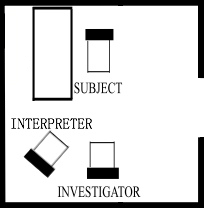
The lateral movement: 1. Stop and get stable. 2. Draw while
taking a step sideways. 3. Stop and stabilize the upper
torso; then deliver the shot.
Illustration Daniel DiPinto
Some
firearms trainers classify shooting while moving as an
advanced skill. Nothing could be further from the truth.
It's an essential, lifesaving skill we should consider one
of the fundamentals of combative pistol craft, right
alongside grip, body position (I don't use the word
"stance"), sights, reloads and malfunction clearances. We
all know hitting a moving target is harder than hitting a
stationary one. Sitting ducks in a gunfight get hurt or
killed. So, don't just stand there move! Here are three
techniques to help you out.
Shooting While Moving Forward
The most commonly taught shooting-on-the-move technique is
moving forward, but unless you serve on a SWAT or entry
team, this is the least desirable movement in a fight. Take
a moment to think about what you do when you perform this
technique: You move closer to your opponent. Unless you
relocate to a more strategic position, moving closer to your
opponent reduces your skill advantage and makes his ability
to hit with lucky shots far less lucky and far more likely.
That said, moving forward is the easiest of the three
shooting movements to master.
Let's look at what's required to accomplish shooting while
moving forward. Have you ever filled a hot beverage cup to
the very brim in an effort to get your money's worth only to
discover it's hard to walk away with the drink? What did you
do in order to get on with your day? You lowered your center
of gravity by bending at the hips and knees, and you walked
heel-ball-toe in order to smooth out your stride. You held
the cup at shoulder level and away you went. Holding a gun
steady is no different than holding a hot cup of coffee
steady.
The better known shooting schools instruct you to shoot from
the waist up just as you would if you stood still. The
secret to stabilizing the gun lies in the hips, knees and
feet. When you use your hips and knees like shock-absorbing
pistons and walk heel-ball-toe, the upper body stabilizes
and the gun doesn't bounce on target. The deeper you bend
your hips and knees, the flatter your gun on target. It's
quite easy, actually. Some instructors advise you to "toe
out" while walking in a "Groucho Walk" (after the legendary
comedian Groucho Marx). I've never found this helpful, but
if it works for you, do it.
While I normally shoot with my arms straight, I find I can
hold the pistol steadier by bending my support arm in a
Weaver-like position. If you use an MP-5, M-4 or shotgun,
which give you four points of body contact (cheek, shoulder,
shooting hand, support hand), the drill is even easier.
Sorry, I don't teach the secrets of the Ninja here, just the
ability to walk smoothly with a hot drink or gun in your
hand.
Lateral Movement
Now let's talk about the two movements that prove more
difficult to accomplish while providing accurate return
fire. But first, note: You cannot run and return accurate
fire. While some disagree and actually teach running and
shooting, I'm concerned you'll merely fall, trip or slip.
Also, don't try to shoot and run with the intent to offer
cover fire; this justification won't hold water. The courts
do not consider hosing down an area with pistol fire in an
effort to keep your opponent's head down as a justified use
of deadly force. Who knows where your errant rounds will end
up? Stay behind cover unless you need to move to better
cover. If you are going to run, run; if you are going to
shoot, shoot. It's that simple.
The most common and best-utilized movement in a gunfight is
the lateral movement. In fact, you should incorporate the
lateral movement just about every time you practice the
draw. Consider this: You confront an armed suspect in the
act of committing a crime. You both zero in and decide to
draw your weapons. He draws and attempts to deliver his gun
in your direction, but you aren't there. You've side-stepped
(i.e., moved laterally), which gives you just enough time to
get into his reaction/response loop, creating lag time for
him and allowing you to deliver the first accurate shot.
Match point, game over, and you win just as you should. This
isn't wishful thinking. This move has saved cops and legally
armed citizens time and time again. It's a valuable tool
worth having in your personal skills toolbox.
The secret: Get stable and stop moving before triggering the
shot. It doesn't take much muzzle movement to miss the human
torso, even at relatively close range. Drawing while moving
sideways is acceptable, but try to stop and stabilize the
upper torso before delivering the gun to the target. You can
accomplish shooting while moving forward and backward
because you remain on the same linear plane as your
opponent, but lateral movement entails moving outside of a
straight line, which makes delivering accurate shots
problematic. Try to stop, if even for the slightest moment,
before pushing the gun to the target, and deliver the most
accurate shot possible. If you need to make a lateral
movement of more than a few steps, don't try to shuffle-step
sideways; this will only result in a slow, convoluted
movement that won't get you out of the line of fire. After a
few steps, turn sideways and walk as if you are shooting on
the move going forward, but turn your body and shoot with
either one hand or an extreme Weaver-style arm position.
Moving Backward
Shooting while moving backward (what I call "attacking to
the rear") remains the most difficult move to execute
correctly. Some instruct you to simply walk backward in a
toe-ball-heel stride, which you can accomplish on a flat
range, but it won't likely keep you upright if you need to
move fast. Walking backward turns into running backward if a
fight develops, and no one can run backward. Your butt
overrides your feet, you lose balance and you fall. Most of
us have seen the video of the Ohio deputy sheriff shooting
it out with the white supremacist Kehoe brothers. During
this fight, we see the deputy move off camera around a
cruiser. Many think he's taking cover, which is not the
case. He fell while trying to run backward on a flat, paved
street. The deputy told me his fall was the scariest part of
the whole fight: "I just knew I was going to take rounds up
through my rectum," he said, "and those would be
non-survivable wounds." Take it from him: Don't try to walk
or run backward.
A better way to move to the rear in a controlled fashion is
to either shuffle-step or step-and-drag. Either of these
allows you to move back quickly while remaining upright.
Like moving forward, the shock-absorber effect of the hips
and knees is necessary to keep the upper body stable. The
shuffle-step allows you to use your feet in the conventional
motion of one foot preceding the other, while the
step-and-drag requires one foot to step back while the other
then catches up. Both enable the feet to stay in contact
with the ground, making a fall much less likely if you must
move rapidly to the rear. You can disengage surprisingly
fast when using one of these two techniques; it just takes
practice.
Moving away from an opponent proves important because every
step you take greatly increases the likelihood an untrained
opponent will miss. Take a look at these statistics showing
the degree 1/8 inch of muzzle movement affects on-target
accuracy at increasing distances:
-
5 yards: 1/8 inch changes the point of impact by 41/2
inches;
-
7 yards: 1/8 inch changes the point of impact by 61/4
inches; and
-
15 yards: 1/8 inch changes the point of impact by 87/8
inches.
Take into account an untrained opponent who grabs a pistol
and slams on the grip and trigger, and it's not hard to see
how someone can miss by a couple of feet. The distance you
create between yourself and your opponent translates into
your ability to prevail.
Check 360 often and move quickly to the rear.
|
 Firearms
Safety for a Crimefighter’s Family Firearms
Safety for a Crimefighter’s Family
BY
SGT. BETSY BRANTNER SMITH
Reprinted from
Officer.com
It takes very little strength to pull the trigger on a gun,
so we must be diligent in the safe handling and storage of
our own firearms, beginning in our homes.
There are few topics in the news today as hot as firearms.
Guns and ammo are flying off the shelves even as others are
calling for stricter gun laws and less access to firearms
for the average citizen. Wherever you stand on the
“gun debate,” as a law enforcement officer firearms are a
part of your everyday life. We all know that owning
and using a gun comes with incredible responsibility, but
cops also need to see themselves as role models, advocates
and resources for firearms safety. About 600 people
die each year in the United States from accidental gunfire,
including police family members, primarily children.
It takes very little strength to pull the trigger on a gun,
so we must be diligent in the safe handling and storage of
our own firearms, beginning in our homes.
Gun safety starts at home.
In the academy we all learned the basic rules of firearms
safety. Those are the same rules you should be sharing
with your family, and you need to do it early and often.
If you have young kids in the house, you must make sure that
they do not have unsupervised access to a loaded firearm.
Several times each year a cop’s kid is killed with that
officer’s firearm. Because we are so comfortable with
guns, we can become a bit too relaxed, leaving a loaded gun
where little ones can access it. This has lead to
tragedy for more than one police family, including criminal
charges against the officer. You have to balance your
own accessibility to a loaded gun so protect your home and
family with safe, “kid-proof” storage.
Recognize that kids are crafty.
They’re also tenacious and unrelenting when trying to access
something they’ve been told is “off limits.” A 1990’s
study showed that most kids could access their parents’
“secured” firearm within a matter of minutes, whether it was
in a lock box or secured with a trigger lock. More
recently, a tragedy in Texas occurred when a police officer’s
two children accessed his off duty gun from his
department-issued gun safe. The younger of the two
children was accidently shot and killed; the safe was found
to be easily opened just by shaking it. Think like a kid
when it comes to securing your firearms at home. And
again, keep in mind that the more mysterious firearms seem,
the harder your kids (or any other kids in your home) are
going to try and find it.
Remove the mystery.
I just read on an Internet child health site that “guns in
the home should be kept hidden at all times from children.
They should never know that a firearm is in your house.”
I find that statement not only ridiculous but downright
dangerous. The more mysterious you make guns, the more
temping they become to kids. You can teach your
two-year-old not to stick his finger in an electric wall
socket, so start teaching him about gun safety too.
Using age appropriate terms and details, explain to your
kids how a firearm works, why you carry one, what they are
used for, and how dangerous they can be. The more children
know, the less curious they are. If you are
comfortable doing so, sit down with your kids and take your
handgun apart and explain what each piece is. Let them
look through the barrel, properly hold the frame, and see
how all of the pieces fit together. Help them
understand that a firearm is a tool, not a toy.
Make shooting a family activity.
Presuming you keep firearms in your home, you shouldn’t be
the only one in the house who is familiar with them.
Your spouse, partner, older kids and close friends should be
familiar with what you own, where you store them, and
ideally, how to safely and properly operate them. One
of the best ways to accomplish this is to make shooting a
family activity. If you’re not comfortable being the
family instructor, there are great courses and camps for
both kids and adults to learn the basics of firearms.
Very often in this profession we struggle with our
relationships. Getting involved in something fun
together is a great was to bring our family and friends into
“our world.”
Off duty officer safety.
One of the many advantages of teaching firearms safety,
skills and awareness to your family and friends is that it
tends to lead to better off duty officer safety for you.
If your spouse and kids understand where, when and why you
carry an off duty gun, they’re more likely to be supportive.
Encourage your civilian spouse or partner to obtain a
concealed carry permit. On every outing, let the
family know which firearm you’re carrying and where.
Make it part of your family routine. Remember, the
word “ethos” means “habits.” Bring those “warrior
ethos” home and share them with your family and friends.
Your family, your community, and our country will be safer.
 Prescription-Drug Epidemic: Building a
Case Against Potential Pill Doctors Prescription-Drug Epidemic: Building a
Case Against Potential Pill Doctors
By Leischen Stelter, American Military University
The drug landscape has shifted dramatically in
recent years and law enforcement agencies now find
themselves battling the legal system. Prescription
drug abuse-the intentional use of medication without
a prescription or taken in a way other than as
prescribed-has skyrocketed in recent years.
One of the primary issues for law enforcement is
that many people are obtaining prescription drugs
through legal channels. “Unfortunately, there are
more of these pill doctors out there than most
people realize,” said Jim Deater. During his 24
years in law enforcement, Deater spent 15 years in
the Homeland Security and Intelligence Bureau. He
investigated large-scale national and international
drug trafficking organizations, homicides and gangs.
He found that the average case involving doctor
prescriptions and illegal drug prescriptions took
about 18 months. Read more about a 10-month
investigation that resulted in $1.4 million in cash
deposits from illegal prescriptions as well as
Deater’s recommendations for police officers
pursuing cases of potential pill doctors. more
>
< < jump to the policetraining.net home page
Image credit: aijohn784 / 123RF Stock Photo
Image credit: gelpi / 123RF Stock Photo
Image credit: ginasanders / 123RF Stock Photo
|
|
