|

|
|

June
2013
Important: To ensure future delivery of
the Policetraining.net newsletter to your inbox (not bulk or junk folders)
please add our "From" address
info@policetraining.net to your address book or e-mail whitelist.
|
- Sponsored By -
 |

 Life's
Not Fair; Life's
Not Fair;
Being an Emotional Winner
By Sgt. Betsy Brantner Smith
When I was still in elementary school I decided that I’d become
a cop. Certainly my strong sense of right and wrong, fair and
unfair, good and evil would serve me well as a law enforcement
professional.
In all of my law enforcement training classes I have a presentation
slide that says simply “Nobody ever said life was going to be fair.”
Whether I’m talking to cops, dispatchers, trainers, commanders,
sworn or civilian, this statement always generates discussion.
This probably isn’t the first time you’ve heard some variation of
“life isn’t fair.” I first heard it growing up on a farm in northern
Ill. the 60’s and 70’s. I was a pretty happy kid, but I was always
looking for things to be “equal.” Why did my brother have different
chores than I did? Why did that girl in my 4-H club have a nicer
horse that mine? Why did we have to go to church every single Sunday
when some of my friends got to sleep in? “It’s not fair!” I whined.
My mom, an elementary school teacher, never got angry, no matter how
much I complained. She’d just smile wryly at me, say “Elizabeth,
nobody every said life was going to be fair,” and send me on my way.
When I was sill in elementary school I decided that I’d become a
cop. Certainly my strong sense of right and wrong, fair and unfair,
good and evil would serve me well as law enforcement professional. I
became a police officer and less than four years later my mom died
of cancer at the age of fifty-five. She never smoked, she rarely
drank, and she was the kindest person I’ve ever known. Life really
isn’t fair.
For the next several decades I tried to figure out how to make my
life, both personal and professional, “fair.” Sometimes things went
my way, sometimes they didn’t. There were times when I thought I had
control of my life, and then something would come along and all of a
sudden, I’d be at the mercy of someone or something else. I’d watch
bad things happen to good people. Life seemed so unfair sometimes.
Fortunately, in 2002, a former cop-turned-psychologist named Kevin
Gilmartin published a book called “Emotional Survival for Law
Enforcement.” It’s still one of the most valuable resources for any
cop, correctional officer, soldier, dispatcher, probation/parole
officer or anyone who cares about someone in the law enforcement
profession. As I read this book for the first of many times to come
I initially noticed, much to my chagrin, that Dr. Gilmartin
basically agreed with my mom that life wasn’t fair and I needed to
learn to accept that. I think Dr. Gilmartin would have gotten along
pretty well with my mom
I started to study this issue in earnest. I’d always been searching
for ways to increase my optimism and to help my students do the
same, but up until now I’d been more concerned about teaching
officer safety, career survival and topics like community policing,
communication and investigations skills that I hadn’t given a whole
lot of thought to my own “emotional survival.” I attended Dr.
Gilmartin’s class. Like many of my other training role models like
Dave Smith, Val VanBrocklin and Bruce Sokolove, Dr. Gilmartin tells
his students to take control of their own careers, their own skills,
and their own lives.
What happens to cops who view themselves as a “victim” most of the
time? If they perceive that the agency has or is going to continue
to “screw” them and their “locus of control” lies with everyone
else, but certainly not with them? As Dr. Gilmartin says, these
officers may have a difficult time returning to the enthusiastic and
committed cops they once were. Instead, they take on “victim
attributes,” such as a merging of personal and professional roles
(“I’m a cop 24/7”), they are rigid, inflexible, and hypersensitive
to change, because change is seen as an assault. These officers tend
to feel paranoid, that the agency is constantly out to get them, and
they begin to feel a need for retaliation.
Without actively working at taking control of their own emotional
survival, these officers run the risk of becoming professional
malcontents, and they may also drive away their family and friends,
the very people who truly care about them. Their lives may become a
self-fulfilling prophesy of misery, both personally and
professionally.
This was all such great, eye-opening stuff that I began to also
incorporate these principles into my own training classes, including
classes like “Don’t Whine…WIN” and “The Winning Mind For Women.”
Pretty soon, I’d have woman after woman approach me and tell me some
version of their own “life isn’t fair” struggle that had affected
their personal or professional life. I had to do more than just
quote my mom to them so again, I began to study, and I came across a
wonderful book, “The Female Brain” by Dr. Louann Brizendine. This
book should be read by anyone who works with, lives with, cares
about, trains, is raising, or is a female of the species.
Dr. Brizendine tells us something we already know, that women are
generally not big on conflict, but she also shows us that we are
“hard-wired” or biologically pre-disposed to such behaviors. There
are reasons for us to feel the way we do, it’s all right there in
our brain! Think about it, one of the best ways to avoid conflict is
to make sure everything is “fair.”
Just watch a group of little girls playing, they will make sure
everyone has a role in whatever they are playing, they will ask
questions like, “Let’s play soccer, OK?” or “Is it OK if we play
house?” Generally speaking, women prefer it when everyone is getting
along -- when there is no conflict to deal with -- which often means
everything is going the way they want it to go. (Sorry, ladies, I
have to tell the truth here, no matter how much it hurts!) So when
something perceived to be “unfair” happens (the department cancelled
my day off; that guy got a promotion that I deserved more than he
did; the sergeant treats her better than he treats me, etc.) most
women have a much harder time dealing with it than most men do.
What’s the professional implication here? All cops have to be aware
of avoiding the “victim” mentality when things aren’t going their
way, but women have to be especially vigilant and work even harder
to become what Dr. Gilmartin calls an “emotional survivor.” In a
profession where we have a significant divorce rate, a high rate of
alcoholism and an increasing rate of officer suicides, our ability
to “win” emotionally is just as important as “winning” on the
street.
And in a profession that still has difficulty recruiting and
retaining women, all trainers, administrators, and female personnel
themselves need to study the science behind how women think and
realize (and admit!) that men and women truly are different, and
both sexes need to work hard at their own emotional well being,
because remember, “Nobody Ever Said Life Was Going To Be Fair!”
Dr. Kevin Gilmartin http://www.emotionalsurvival.com/about.htm
Bruce Sokolove http://www.linkedin.com/pub/bruce-sokolove/28/996/894
Valerie VanBrocklin http://www.valvanbrocklin.com/
Dave Smith http://jdbucksavage.com/
Older Recruits
|
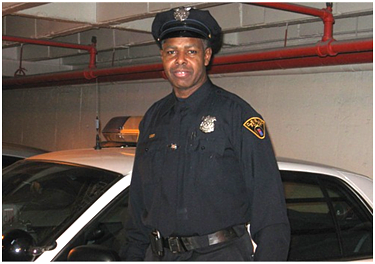
Second-career officers are increasing within the ranks.
by William Harvey - Police Magazine
Second-career "start-overs" are increasing in our ranks. I
don't know whether it's the economic situation,
disillusionment with a current job, or fulfilling a
childhood dream but older candidates are applying for
policeland. I recently had a chap call me and ask if he
should apply for the police test. He is in his early 30s and
wanted to know his chances. Let's take a look at this
phenomenon.
Post military careers are quite common (author included). If
you're in the military and can't decide whether to stay in
or look for a civilian job, you may want to give this cop
gig a whirl. The uniforms, ranks, governmental benefits, and
guns will sound familiar. In the 60s and 70s, the Vietnam
era churned out a great crop of police officers. More recent
conflicts are doing the same. Chiefs should give a vet a
chance!
Economic woes, downsizing, and over-qualification have been
a recent stimulus for many to seek employment amongst our
ranks. At the 50,000-foot level, most see it as a government
job with protection and perks. Most think that no police
agency will ever downsize, but think again. The larger
cash-strapped cities are now leaving positions unfilled and
slimming down their ranks.
Some view the occupation of a cop as inside work and no
heavy lifting. Think again. Fully explore your new employer
and understand how the agency can withstand any more
shuttering of the economy.
The disillusionment with a current career and life is
another reason I've heard to seek out Copland. Candidates
want a job helping others and making a difference. OK,
sounds good at the oral boards but stop and think. Do you
really understand what real cops do? I had a high school
teacher ask about being a cop. He hated dealing with youth
and wants to leave the classroom to become a cop. If you
hate working with juveniles now, what do you think you're
entering into?
Stop and fully evaluate your reasons here. The other problem
of a second career is that cops may have to work 24 hours a
day, 7 days a week, holidays, and during your kid's
recitals. The working environment is not for the faint of
heart.
For the late 20s to mid-30s set who still want to apply,
let's have a little reality orientation. Before you apply
for the job, honestly try to address these points.
Physical standards: Most academies have physical standards
for entrance and graduation known as P.T. (Physical
Training). Most of these are not graded on the curve for
older students. You'll be expected to run, jump, and wrestle
with the 21-year-olds. Can you?
Background investigations: Let's face it, you have 10 to 15
more years of experiance than the young bucks of getting
into stuff, driving, and employers. You also have 10-15
years extra of life's little problems, issues and such to
explain. Can you?
Academy and FTO programs: To go to work for some employers
involves a couple of days of new-employee orientations and
that's it. In Policeland, you have at least of year in the
academy and the FTO program before you can breathe without
worry. If you have a family, can you have the kiddies cared
for? Will they understand that dad or mom will be in an
academy for six months and can't come out and play?
Starting over: Let's say you have some seniority, rights,
and privileges at your current job. Can you stand being an
FNG all over again?
School work: When was the last time you were in school? The
young ones are straight out of college or within a year or
so of academia. When was the last time you had to take
notes, submit papers, or study for exams? The older we get,
the harder this gets. Are you ready for this critical piece
of the pie?
Can you check your ego at the door? Finally let's take this
one wild card element. You are 35 and your training officer
is 25. You have 10 years more life experience and other
intangibles. Can you let a youngster teach you or supervise
you? Check your ego.
I'm not trying to scare off the second-career group. Some
make the finest officers I've ever worked with. They will
have challenges to overcome, and it can be harder for them
than the younger set. Those who make it will appreciate the
job and all it can be. Before you think of applying on a
whim, weigh the job out for you and your life. Still going
to try it? Good luck. Stay safe and train hard!
|
 Basic
Requirements for Officer-Owned Carbine Rifles Basic
Requirements for Officer-Owned Carbine Rifles
Firearms Training:
Fundamentally Sound
with Chris Cerino
Reprinted from PoliceOne.com
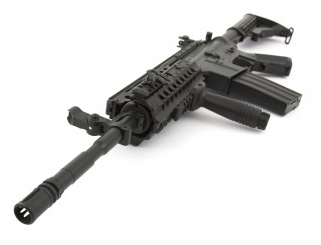
Who can deny the many benefits of carbines in police work?
They are light weight, light recoiling, adjustable, high
capacity, long range, accurate and with proper training,
very easy to operate. A fair adage would be to say that
anyone who doesn’t have a carbine is looking for one, and
anyone who has one, is looking for another one. Stores can’t
keep them on the shelves and high-end carbines are selling
more and more because the end users are becoming educated in
the benefits of a well-built machine.
Over the years I’ve trained a lot of people in the use of
the carbine. People often ask me, “What is your carbine
class like?”
I tell them that it is exactly like my pistol class except
with a carbine. It focuses on weapon familiarization,
handling, and manipulation skills, as well as the
fundamentals of marksmanship as they pertain to the system.
With these skills and some continuing education in the
carbine, officers are able to solve incidents without having
to worry about the function of the gun.
People often ask me about my opinion on personally-owned
carbines for police officers. I feel strongly that any
officer who wants to own his or her own carbine should be
permitted to do so. Of course, if I managed the range
program, I would also set parameters so that the weapons
they use are ensured to be safe and reliable.
There are so many quality carbines on the market today that
any of them will meet an officer’s needs. This day and age
sees more carbines produced at a higher rate, by a larger
variety of manufacturers than any other time in our history.
Almost any manufacturer can have a problem with a gun at any
time. That can happen with anything. However, over all the
years of teaching and the many guns I have seen come through
training, I have come to some educated conclusions about
what makes a poor choice for a patrol carbine.
The guns I see that usually fail are ones that are cobbled
together by mixing and matching the cheapest of available
parts from a variety of manufacturers. They are often poorly
armored and/or assembled incorrectly. The guns that fail may
be a quality gun that was tampered with to make it “better.”
Many a time I have seen an officer spend all the money he
has on the rifle and then put the most inexpensive
accessories on it. Remember that a chain is only as strong
as its weakest link. If you have bought a flat top carbine
and then put a $95 red dot sight on it, you’ve reduced the
operation value of the weapon to that sight.
Carbines are all the rage these days in law enforcement, and
many of the officers I train ask me what my ideal patrol
carbine would be.
My patrol carbine is a basic entry model with iron sights, a
small rail piece for a white light, a fixed skeleton stock,
and a two point quick adjust sling. It is light, reliable,
and ready to rock with the sling masking taped to the hand
guard for quick deployment. No adjustments, nothing that can
render it useless. If I had some extra money, I would have
one of the new long life red dot sights — one that I could
leave on and simply change the battery ever year on my
birthday. One side note here: Red dots are really fast but
they don’t compensate for your inability to apply the
fundamentals.
Back to personally-owned patrol carbines. The reasons I like
the idea are few but strong.
An officer who wants a personally-owned carbine will usually
carry it with him on patrol. This officer will likely be
more familiar with it and have confidence in its ability and
therefore be more likely to deploy it at an appropriate
incident. Lastly, they will more likely clean and maintain a
personal gun (I’ve seen my share of bagged trunk guns, all
banged around and neglected).
Parameters for a Personally-owned Carbine
• A quality upper and lower appropriately matched
• A quality set of iron sights, front and rear
• A white light mounted in a solid and functional location
• A quality, simple-to-use sling
Personally-owned weapons would be subject to inspections for
function and reliability. The range master or instructors
responsible for these inspections should attend a quality
armorers program. A solid armorers program does more than
just show a person how to disassemble and reassemble a
weapon system. It should teach trouble shooting, problem
areas to inspect, maintenance intervals, common problems and
solutions.
A good armorers program should show how to replace a barrel
and the proper reinstallation and timing of the barrel nut.
An agency armorer should be able to open a weapon up and,
for the most part, visually verify that the various
component groups are assembled correctly. The reason that
the above listed topics should be in an armorers program is
simple. The AR15 / M16 platform is the most widely used and
highly customizable weapon system on the market Officers
will want to customize their rifles and a qualified armorer
should be on hand to facilitate this.
Changing sights, hand-guards, gas blocks, bolts and
carriers, grips, stocks, and even barrels are all reasonable
modifications when done with quality parts, proper tools and
solid knowledge.
I’d like to talk next time about running the carbine and the
training required to be a competent operator. It’s doesn’t
take much, just a solid, knowledgeable approach.
Until next time...
About the author
Chris Cerino, who has served with Medina (Ohio) Police
Department, Federal Air Marshals, and the Ohio Peace Officer
Training Academy, is a nationally-known firearms instructor
who has been training law enforcement officers and military
for more than 10 years. Chris has worked in law enforcement
positions for municipal, county, state and federal agencies
spanning 19 years. A majority of those years have been spent
in tactical and firearms related fields. As the director of
training for Chris Cerino Training Group, Cerino remains
immersed in the firearms and tactics training culture.
Teaching the importance of fundamentals in a “do as I do”
fashion has enabled him to be a respected instructor across
the country.
< < jump to the policetraining.net home page
Image credit: icetray / 123RF Stock Photo
Image credit: echoart / 123RF Stock Photo
|
|
