|

|
|

December
2014
Important: To ensure future delivery of
the Policetraining.net newsletter to your inbox (not bulk or junk folders)
please add our "From" address
info@policetraining.net to your address book or e-mail whitelist.
|
- Sponsored By -
 |

Can Cops Really Avoid 'Extra' Shots? A Realistic Research Review
|
 Force
Science Institute Force
Science Institute
The findings of a new study, obtained under stressful but
nonthreatening laboratory conditions, comprise a starting
point for understanding the human dynamics involved in
promptly concluding a shooting episode.
A flashpoint of controversy in some officer-involved
shootings is when officers do not immediately cease fire the
moment a deadly threat ends and they are no longer in mortal
danger.
An officer’s ability to instantly stop pulling the trigger
once a “stop shooting” signal becomes evident is not always
considered. Instead, the officer behind the gun may face
harsh media criticism and daunting legal action alleging
deliberate excessive force for firing “unnecessary” extra
rounds.
This is a conundrum that the Force Science Institute has
explored in pioneering research, and a review of its
findings is published in the current issue of Law
Enforcement Executive Forum, a peer-reviewed journal.
The report, authored by FSI’s executive director Dr. Bill
Lewinski, Dr. William Hudson, dean of the College of
Engineering, Mathematics, and Science at the University of
Wisconsin-Platteville, and Jennifer Dysterheft, a Force
Science research associate and doctoral candidate at the
University of Illinois, focuses primarily on four
human-perception, decision-making, reaction-time experiments
conducted with 102 experienced LEOs in Arizona.
“Our findings, obtained under stressful but nonthreatening
laboratory conditions, comprise a starting point for
understanding the human dynamics involved in promptly
concluding a shooting episode,” Lewinski told Force Science
News. “They very clearly illustrate the challenges of
responding instantaneously to a rapidly changing situation.
“The infinitely more complex circumstances of a real-world,
life-threatening gunfight are likely only to magnify what
our officer volunteers experienced.”
Light Cues
In the experiments, the officers one at a time were equipped
with non-firing 9mm Glock training guns that were rigged so
that trigger pulls could be precisely timed to thousands of
a second. In a training room, they then faced a 3X3-ft.
“stimulus board” studded with nine clusters of colored LED
lights that could be remotely activated by computer in
unpredictable patterns of increasing complexity. Each
officer responded with five “trials” to each of a series of
four tests as monitors measured their trigger-pull reaction
times.
Test #1. To establish a simple typical
reaction time, officers were instructed to watch a specific
cluster of lights on the board and when a green light came
on, they were to pull the trigger once, “as quickly as
possible.”
The fastest time between the light flashing on and an
officer beginning to move the trigger was 0.17 second, with
the slowest being half a second. The average time to
perceive the change cue and initiate trigger pull was 0.25
second. This is starting with the officer’s gun already
aimed at the threat, with the officer’s finger on the
trigger and the officer primed to respond.
Test #2. For these five trials, the
officers were told to begin “shooting” as quickly as
possible when the green light came on and to “continuously
pull the trigger” as they might in an actual gunfight until
the light blinked off, representing an end of threat. Then
they “must stop instantly” or their “score” would be
penalized. The duration of the shooting time was randomly
varied among the trials.
Responding to this simple
stimulus, some officers were able to stop immediately, but
the slowest to stop completed six more trigger pulls after
the light went off before releasing the trigger for good. On
average, officers shot one more round and started a second
trigger pull that would likely be completed in a real-world
situation after the “threat” stopped.
Test #3. Officers were to watch a full row
of light clusters, which consisted of three bulbs each. If
only one or two lights in a cluster came on, the officers
were not to shoot. Only when a complete cluster was
simultaneously illuminated were they to fire.
This relatively simple increase in the complexity of
decision-making roughly doubled reaction times. Now, on
average, 0.56 second passed between the time a full cluster
lit up and the officers initiated a trigger pull.
Test #4. In the final and most complex
trials, officers were to focus on the entire stimulus board.
They were to pull the trigger “as quickly as possible” once
all the green lights in any row were lit. As distractions,
yellow and red lights in the clusters might turn on or the
green lights in a row might not all be lit.
The average reaction time to start shooting — 0.46 second —
actually improved slightly for this experiment. The officers
learned to “anticipate a pattern evolving and simply had to
recognize that pattern,” the researchers explain.
Implications
The decision-making in the experiments was the “simplest
possible” compared to the challenges facing officers in
real-world deadly force encounters, the researchers point
out. In street confrontations, LEOs must deal with “a
multitude of stimuli, ambiguous circumstances, poor ambient
light, and a complex, dynamic, and often evolving threat
situation”—all of which will tend almost inevitably to
impact on an officer’s ability to rapidly evaluate options
and react to contextual changes.
“It is always expected that officers perform at expert
levels of shooting,” Lewinski says. “If they fire excess
rounds or make any mistakes, they are highly criticized and
held accountable. Yet this study suggests, among other
things, that many officers may be unable to cease firing
instantaneously when the suspect is no longer a threat.
“Everything an officer does takes time. It takes time to
perceive that a threat level has changed and it takes time
to decide to stop shooting and to mechanically activate that
decision. When officers are engaged in continuous rapid
fire, as their training requires for defending their lives,
the stopping process is more complex and generally takes
longer.”
In their paper, the researchers note that “if an officer
were to take [merely] 0.56 seconds to react to a
stop-shooting signal, three to four [extra] rounds could be
fired by the officer as an automatic sequence after the
signal to stop had already occurred.” The slower an
officer’s reaction time, “the greater number of shots [can]
be fired before a conscious stopping can occur.”
The researchers also comment on the number of mistakes
officers made during Tests #3 and #4. In Test #3, 3 percent
of rounds fired were “false positives”; that is, officers
misread the stimulus and fired when they shouldn’t have.
“That number more than doubled [to 8 percent] with the
addition of pattern recognition” in Test #4.
“This directly translates into officer-involved shootings,
suggesting that with complex decision-making components, in
addition to movement patterns, there is nearly a 10 percent
risk of officers making false positive errors or shooting
when the pattern appears to represent an evolving threat but
in reality it never reaches that point.”
What suggests even more physical danger for officers is the
number of false negatives that occurred in the tests, “when
the officers did not shoot when they should have.” This
represented only 1 percent of the trials in Tests #3 and 4,
but on the street the consequences could have been grave,
giving “deadly suspects the advantage” and putting officers’
“lives at risk.”
Among other troublesome aspects of “extra shots” incidents,
the researchers also address controversial complications
that often arise from rounds fired at moving vehicles and at
suspects who are falling to the ground after already being
hit.
“Before analyzing real-life shootings, it is necessary to
understand the basic reaction times and other data recorded
in this study,” Lewinski says. “The principle purpose of the
study was to create a foundation of such knowledge. We
anticipate conducting more sophisticated testing of pattern
recognition and decision-making in the future.”
The full study, titled “Police Officer Reaction Time to
Start and Stop Shooting: The Influence of Decision-making
and Pattern Recognition,” will soon be available on the
journal’s website as well as on the Force Science Institute
site. We will make an announcement once the study is posted.
The study findings and their implications for investigators
and use-of-force reviewers are discussed in detail during
the five-day certification course in Force Science Analysis.
About the author
The Force Science Institute was launched in 2004 by
Executive Director Bill Lewinski, PhD. - a specialist in
police psychology -- to conduct unique lethal-force
experiments. The non-profit Force Science Institute, based
at Minnesota State University-Mankato, uses sophisticated
time-and-motion measurements to document-for the first
time-critical hidden truths about the physical and mental
dynamics of life-threatening events, particularly
officer-involved shootings. Its startling findings
profoundly impact on officer training and safety and on the
public's naive perceptions.
For more information, visit www.forcescience.org or e-mail
info@forcescience.org. If you would benefit from receiving
updates on the FSRC's findings as well as a variety of other
use-of-force related articles, please visit
www.forcesciencenews.com and click on the "Please sign up
for our newsletter" link at the front of the site.
Subscriptions are free.
|
|
Fitness Tip from

Get a better total-body workout with the
Split Squat with Elevated Back Foot. While still working the
quadriceps similar to a Seated Knee Extension, you will get an
additional challenge to the hamstrings, glutes, and core. Not only
that, these muscles are challenged in a single leg position
requiring balance, strength, and stability similar to what is
required in everyday life.
Click here for a video displaying how to perform the exercise
along with suggestions on how to modify and amplify it.
3 Keys to Preventing Problem Officers in your
Ranks
 Too
often, police leaders seem to believe that ‘bad
officers’ only flourish in someone else’s back yard and
not their own Too
often, police leaders seem to believe that ‘bad
officers’ only flourish in someone else’s back yard and
not their own
By Paul Cappitelli
During my 30+ year career in law enforcement, I had the
privilege of working with some of the best and brightest
investigators in law enforcement. I watched in amazement
as crimes were solved and arrests were made by building
upon the smallest pieces of information.
But for some reason, law enforcement officers are inept
at recognizing criminal activity taking place in their
own midst. News that a fellow officer has been arrested
and charged with a crime sends shockwaves not only
through the agency itself, but the profession as a
whole. In several instances, this news comes as a
complete shock to the suspect officers’ peers,
supervisors and chief executives.
Sadly, the news is too often met with the intrinsic
reality that the criminal activity is not surprising
given the history of the officer’s on and/or off duty
conduct. The “elephant in the room” is the fact that law
enforcement leaders too often ignore the warning signs
that indicate that a problem is lying in wait.
How Can It Be? Let’s take a
moment to reflect on some of the headlines about
misconduct in the recent past. It seems like all too
often there is a headline about some officer in some
department in some city that engages in criminal
activity and is arrested. The examples below are derived
from various accounts of officer misconduct across the
country with no specific reference to any individual(s)
by name.
How is it that an officer can be charged with
solicitation for a sexual act on duty multiple times and
no one knew? It is difficult to fathom that there
weren’t prior citizen complaints regarding the officers’
misconduct on traffic stops or citizen contacts that
were minimized or possibly shrugged off by supervisors.
How can an officer be involved in the criminal
enterprise of selling illicit drugs without someone in
the ranks being suspicious about his/her lifestyle?
There had to be some indicators around the locker room
water cooler about unusual activities.
How is it that an officer can spend off-duty time riding
with outlaw motorcycle gangs and somehow manage to steer
clear of any type of illegal activity?
How can an officer with an affinity for DUI arrests
repeatedly fabricate evidence against the suspects
without someone questioning the validity of the cases?
There had to be some indication as to the number of
cases that were being contested and/or thrown out of
court for lack of evidence at some point along the way.
How is it that several officers in a large metropolitan
police department can — without detection — operate an
escort service using underage girls? There must have
been some clue either inside or outside the department
that this was occurring.
How is it that an officer can have an affinity for child
pornography without someone around him suspecting that
something was odd?
How can it be that a band of rogue narcotics officers
can commit crimes and acts of violence against the
community for years without accountability?
How do toxic officers continue to flourish in the
profession despite the efforts to screen applicants and
maintain ethical high standards?
Here’s how: “NIMBY.”
The term NIMBY is often used in political activism and
protests against the construction of factories, prisons,
and low-income housing facilities. It stands for “Not In
My Back Yard.”
The twist in law enforcement is that too often, police
leaders seem to believe that ‘bad officers’ only
flourish in someone else’s back yard and not their own.
What Can Be Done?
The sad reality is that every agency
is susceptible to bad seeds — some more than others. But
how does the bad officer go undetected? What can be done
to safeguard against the problem?
The ostrich is one of the many birds who cannot fly. He
hovers around the nest and runs away from a problem
rather than confront it. The eagle is a proud bird who
soars through the sky with keen eyesight, vigorously
defending his domain.
So, police leader, be an eagle, not an ostrich. Here are
three tips to get you going in the right direction,
keeping the yard clean and free from toxins.
1. Listen
It is paramount that leaders talk openly with
first-line supervisors and middle managers about the
importance of monitoring the conduct of the troops. Most
leaders get immersed in the daily regimen of keeping the
politicos at bay that they lose sight of the fundamental
importance of “keeping the home fires burning.” Much can
be learned from the misgivings of others, so listen
carefully to your first-line supervisors.
2. Look
Often times there are warning signs of bigger
problems that are left unchecked because nobody was
looking closely enough. Encourage open discussions about
these potential problems in private staff settings and
conduct administrative inquiries whenever necessary.
Don’t allow the stellar performance of an officer to
deter you from inquiry if it appears that something is
amiss. Any information about possible misconduct must
not be shrugged off or minimized.
3. Lead
Finally, develop a cadre of leaders who are
eagles and sheepdogs. Leaders should hold supervisors
and managers accountable to track the habits of every
officer under their command. The great, hardworking men
and women of the police profession are counting upon the
leaders to recognize problems and take decisive action
without delay.
About the author
Paul Cappitelli is a career law enforcement professional
with over 35 years of experience. From 2007-2012, Paul
served as executive director of the California
Commission on Peace Officer Standards and Training
(POST). Prior to this, he served with the San Bernardino
County Sheriff's Department (SBSD) for 29 years retiring
at the rank of Captain. Paul has a Master's degree in
Public Administration and a BS degree in Business and
Management..
|
3 Keys to Planning for Retirement After a Police Career
|
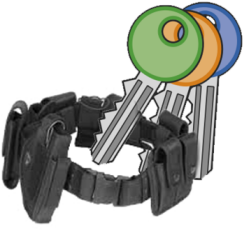 I
wish I could go back and tell my 21-year-old rookie self, “Hey kid,
make sure you start planning for retirement” I
wish I could go back and tell my 21-year-old rookie self, “Hey kid,
make sure you start planning for retirement”
By Betsy Brantner Smith
Reprinted from Policeone.com
Like most cops, retirement was the furthest thing from my mind when
I was hired. All I could think about was graduating from the
academy, successfully completing field training, and getting started
with my law enforcement adventure.
I wish someone would have said, “Hey kid, you need to start planning
for retirement,” so that’s what I’m going to say to all of you.
Rookies, veterans, and everyone in-between must plan for the day
that they hang up the gun belt.
No matter how much time you have on the job, there are three things
you must think about NOW to plan for retirement.
#1. It’s Never Too Soon to Plan Ahead
Every police academy should
bring in a financial planner to talk to recruits. Many new cops go
from college, the military, or lesser paying jobs to a decent salary
and then too many businesses want to sell them a car, a house and
lots and lots of credit cards.
I wish I’d spent more of my early career learning how to save and
invest and less time seeing how many boutiques and gun shops would
give me a big line of credit. Fortunately, I dumped the credit cards
within a year and had enough sense to listen to some of my more
senior co-workers when they urged me to invest in a deferred
compensation plan.
As the saying goes, “Pay yourself first.” If you’re young, start by
having a set amount of money taken out of your check every single
pay period and invest it. Put that money into something that will
penalize you if you take it out too early. Generally speaking, the
younger you are, the more risks you can take, but get professional
advice.
If you’re at a midpoint in your career and haven’t done much about
retirement beyond your pension, don’t wait any longer! Assess your
debt and your savings. Start “feeding the pig” as those TV
commercials say, any amount of savings and investment counts. If
you’re toward the end of your career and haven’t saved enough, then
begin looking at secondary employment. Is there something you enjoy
doing that could earn you enough money to supplement your pension?
Regardless of where you are at in your career, make sure you are
familiar with your agency’s pension plan. Pensions used to be a
given and they used to be untouchable, but this is no longer the
case. Ask retired Detroit cops.
Just like on the street, make sure you have a back up plan.
#2. Figure Out What Retirement Means to You
When you’re on your 13th
hour of a 12-hour shift, it’s easy to dream about retirement as
simply “not having to go to work.” However, you’ve got to think past
those first few weeks of sleeping in.
If you’ve spent most of your adult life in a profession that
requires the passion, commitment and sense of mission that law
enforcement does, there’s a good chance that having nothing to fill
your time will become tedious, boring or even depressing. This
doesn’t mean you have to work, but as Dave Smith writes, you’ve got
to make the transition to retirement “a path to a new adventure in
your life.”
Some police officers want to retire and travel the country or spend
more time with family. Others are hoping to launch a second career
or make their “off duty” job or business their primary source of
employment. Long before you retire you need to start figuring out
what you want your retirement to look like.
#3. Make Health Your Priority
In the 1970s, the Cooper Institute for
Aerobic Research conducted a study that concluded that on average,
retired police officers die within five years of retirement. If
that’s still true, then I don’t have long to live, but I’m guessing
this is no longer true.
People — not just cops — are living longer every year. But longevity
doesn’t always equal quality. Make physical and mental wellness a
big part of your retirement plans.
Keep your weight down. Obesity is unhealthy at any age, but as you
age, the negative impact increases dramatically. Alcohol and tobacco
— as all things — should be consumed only in moderation.
Exercise regularly, but make sure the fitness program you’re on
isn’t unnecessarily beating up your bones and joints. My husband and
I both wish we’d stopped distance running at age 40. There’s nothing
wrong with running, but with our mutual history of injuries, there
were much better ways to stay fit than continuing to pound the
pavement, and we’re paying for it now.
You must be intimately familiar with your retiree health care plan
before you “pull the pin” on retirement, especially with the
Affordable Care Act taking over our health care system. Cops all
over this country are getting unhappy surprises in the mail when it
comes to reduced coverage and higher premiums.
Pay attention to your mental health as well as your physical
well-being. It could be that you have unresolved issues from a
critical incident, you’re having a hard time making the transition
to retirement, you feel depression settling in, or something else
entirely.
Don’t suffer in silence — reach out for help.
Organization like Safe Call Now can help both current and retired
law enforcement officers seek help confidentially.
I thought I’d work until mandatory retirement. However, because of
my busy “side job” and my family priorities I ended up retiring
after “only” 29 years on the job. It was a decision I absolutely
don’t regret, but I do wish I could go back and tell my 21-year-old
rookie self, “Hey kid, make sure you start planning for retirement.”
About the author
Sergeant Betsy Smith has more than 30 years of law enforcement
experience, retiring as a patrol supervisor in a large Chicago
suburb. A graduate of the Northwestern University Center for Public
Safety's School of Staff and Command and a Street Survival seminar
instructor for more than 9 years, Betsy is now a speaker, author and
a primary PoliceOne Academy consultant. Visit Betsy's website at
www.femaleforces.com.
< < jump to the policetraining.net home
page>
Copyright: 3dalia / 123RF Stock Photo
|
|
|
