The
Danger List
Reprinted from Police magazine
There are
classic mistakes that get officers killed. You should memorize them,
write them down, and keep the list handy.
One of the first lists I had in law enforcement is still one of the
most important ones in my mind to this day and should still be on
every crime fighter's refrigerator door and patrol car visor, and it
should be posted on every department's roll call bulletin board.
Back in 1975 a buddy told me about a new book by the famous
LAPD detective and Lakewood, Colo., police chief Pierce Brooks. It
was called "Officer Down, Code Three," and I promptly managed to get
my grimy rookie hands on it and read it like a pirate reads a
treasure map.
And like a map, it was filled with directions backed by tragic
examples of how officers go down a path to injury or death and how
we should, and could, avoid that path. In fact, this book made such
an impression on me I used its list and examples as a guideline for
our officer safety training when I was assigned to the academy as
well as an inspiration for several of my "JD Buck Savage" videos.
Over the years I have seen many variations on "deadly errors"
officers make to get themselves hurt but the version that is still
my favorite is the first one I learned, and I think it is time to do
a quick review. I invite you to draw up this list in your own words
and post it where you think it will do the most good. It isn't just
a good reminder to you but to everyone who reads it and many of its
points can make all occupations safer and more aware.
Enough said; let's get into the list with comments:
1. Failure to maintain proficiency and care of weapon, vehicle, and
equipment. How many officers do you know who are trying to prove
they can go several qualifications without cleaning their firearm?
Ask almost any rangemaster in any agency. They'll tell you some
incredible "dirty gun" stories.
2. Improper search, no search, and improper use of handcuffs. I was
recently researching a young officer's death where he had been
killed in a booking area by a hidden weapon that had been missed
even though the suspect had been in the custody of numerous
officers. Since that death the booking officers have reported that
several hundred weapons have been recovered from arrestees not
searched properly, in that same county.
3. Sleepy or asleep. In the era of 12-hour shifts and off-duty jobs
taken to ease financial stress this is more important than ever.
Tired cops are a danger to themselves, and to others. Get your rest.
4. Relaxing too soon. "Yes" people can become "no" people in an
instant, and it is important to make sure the whole scene is safe
before you kick back and savor another great arrest.
5. Missing the danger signs. Many people "leak" anxiety to us merely
because they are stressed, but they could be planning to hurt us.
Pay attention, know the difference, and listen to the verbal cues as
well as the nonverbal hints.
6. Taking a bad position. Since when is a rose bush cover or a
high-risk stop distance 10 feet? Tactically sound positions and real
cover can make a huge difference in your ability to win.
7. Failure to watch their hands. When my alter ego Buck Savage told
Rookie to "watch the hands," he was dead right and yet how many
times do officers fail to do this simple task?
8. Tombstone courage. Many lists call this failure to wait for
back-up or "The John Wayne Syndrome." I call it foolish and a good
way to get others hurt as well as yourself.
9. Preoccupation. Science now confirms that if we are focused
"inside our head" we have a very real chance of getting hurt, if we
are doing anything more than sitting on the couch.
10. Apathy. This bad boy kills us like Raid kills bugs. It is caused
by things like routine, familiarity with the suspect, years of
getting away with bad habits, or simply losing the love of the job.
Worse, this is a tough one to see when it's in the heart of someone
you care about. Apathy is such a passive trait, and it often causes
one or several of the other nine deadly errors on this list. Watch
for it in yourself and in others.
Write this list using your terminology, your impressions, your own
experiences and then post it wherever you think it matters.
Challenge others to make their own lists. But whatever you do, don't
make the mistakes on this list.
Dave Smith is an internationally recognized law enforcement trainer
and is the creator of "JD Buck Savage." You can follow Buck on
Twitter at @thebucksavage.
.

The End of Professional Policing?
Bargain-basement policing may sound the death toll for professional
policing.
by William Harvey – Reprinted from
Police magazine
It is practically impossible to scan the headlines without finding
yet another city or county that has declared that they are in
financial distress.
Detroit's bankruptcy filing means
police pensioners and current officers will probably suffer
draconian cuts. So let the slapping around of their cops and
firefighters over budget cutbacks begin!
The vogue term in headlines now is
"distressed cities,"
which means hang on to your hats, here it comes. All of emergency
services are told to "do more with less." This motif from the
elected dais is the new way of business and the command staff's
marching orders. It's hard to say when this will cease, and we
return to normalcy.
Elected officials seeking reforms seem to lack the respect for the
men and women of emergency services. As one said recently to me,
"There is no difference between a police officer and ditch digger,
you are all my servants." This set me back in trying to find some
reasoning in his off-handed statement. We're both citizens and
taxpayers but the ditch digger, as he so fondly referred to a public
works employee, does not run toward the trouble. They also call 911.
This depersonalization of first responders makes it easier to treat
them with disdain. Callused public statements will garner support
with the tax-paying public. Our counterpoint is the reeducate the
public about the services we provide them.
One thing that allows this depersonalizing environment to take hold
is an old statement from the community policing days. The average
citizen has three-plus contacts with police in their lifetime. One
is usually a traffic citation; the second will be their involvement
in a motor vehicle accident; and the third comes when they are the
victim of a crime.
None of these encounters are pleasant, and if the citizen could
obtain their pound of flesh from the evil copper who gave them a
speeding ticket, then so be it. These elected cop-berating officials
now feed into a mindset wanting cop-payback time. Just as it was in
the late 1980s, we need to win the public's hearts and minds all
over again.
Most of professional administrators use various methodologies to
determine departmental effectiveness in addressing criminality. Many
chiefs use the CompStat method in some format. Elected leaders then
question police leaders about the trends. While trying to extol the
successes of my agency, I was asked why I wasted all that money
solving crimes. When I asked what that meant, I was told that most
crimes in this elected official's view were not important to him or
his dais. He said just take the report; if they have insurance then
it's taken care of.
I retorted that this validates criminal behavior and gives petty
criminals the green light to go free-ranging with their crime
sprees. Still, if it's not him (or someone important to him such as
family or a political supporter) then all go free.
I'm observing "bargain basement policing" in some areas where a
report is taken (for insurance purposes and tax write-offs) with no
follow-up. Unless it's a violent crime, it doesn't get a second
blush. The real victims will be the citizens who applaud this now.
As the pendulum swings off its hinge, their safety and insurance
rates will also become unhinged.
Community policing and other forms of outreach will be another
passing fancy without philanthropic assistance or the support of a
community foundation. Community policing is labor, time, and
investment intensive. If you still want safety programs and citizen
police academies, offer them online. Forget the personal touch.
It's imperative that all of us, from the youngest street copper to
the crusty old chiefs, need to reeducate the public. As I have
always said, "If you don't blow your own horn, someone else will use
it as a spittoon."
Give real answers and real service. Don't shortchange our customer
base. They can defend us, when they're told that the officer who
helped them was no different than some elected official's idea of a
servant. We must seize every opportunity to regain trust and loyalty
from our customers. They're also voters.
Gathering Intel for Dynamic Entries (2 of 2)
|
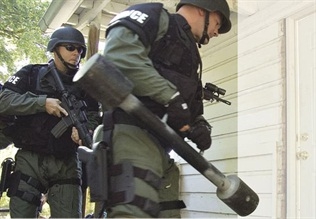 Consider
this scenario, and respond with your proposed plan of
action. Consider
this scenario, and respond with your proposed plan of
action.
by Bob Parker
Reprinted from
Police Magazine
Here's the answer:
The contain-and-callout option didn't seem to be working. No
answer on the phone. There was reluctance to use a
bullhorn/haler. This noise would wake the neighborhood,
bringing out on-lookers and forcing patrol to deal with an
additional problem.
Also rejected was the idea of using the key to open the
front door and turning a police dog loose inside the
residence. The looks of disbelief on the faces of the other
command personnel in the CP caused the sergeant who made the
suggestion to quickly retract it. Yep, great thought. Let
the K-9 tear up anybody they encounter, then the operators
can stay safe and pick up the pieces. Even a dog on a long
lead was extreme when considering the intell the commander
had at the time.
The detectives and patrol cops had re-interviewed the
daughter, son-in-law and other neighbors who were at the CP.
The only negative comment was from the daughter who said,
"Well, dad sometimes raises his voice to mom."
The commander decided that an entry team of 10 operators
would make a controlled entry through the front door using
the key obtained from the daughter.
At approximately 4 a.m., the entry team made its approach to
the front from a neighboring backyard. Some of the perimeter
personnel were assigned to over-watch with the snipers. They
were instructed to also watch for any threats in the houses
and yards that the entry had passed enroute to the target.
Ambush, however unlikely, was a consideration. The team
stacked off the small porch as best they could, and all
involved personnel were advised entry was in progress. The
door opened into a split-level home. From the foyer, a team
sergeant shouted, "Police, anyone in here, show yourself
with your hands up."
After a few seconds, here they came. Two elderly people,
male and female, in their sleepwear came into view. Their
demeanor was so calm it was somewhat disconcerting to the
team operators. This was around 4:30 a.m. on Easter morning.
No Easter Bunny at the door. Ten men in black, helmets,
subguns, and carbines in the house and no startled reaction?
It didn't take long to clear the house. No crime scene. No
one really pointed their weapon at the old folks. We sat
down with them in the kitchen. They stated they had been
asleep, and they get up very early in the morning. (A side
note here: the elderly can be very sound sleepers and awaken
at some unusually early hours.) They stated they had a phone
extension by the bed and neither had heard it ringing when
911 had attempted to call back.
This is usually the point in a callout where SWAT makes an
exit and leaves the follow-up investigation to the
detectives and patrol. They would handle any evidence,
arrests, and the crime scene. There was some thought that
the husband might be taken for mental evaluation. The patrol
commanders and detectives were still working with the theory
that the husband had to be the one who made the initial
threatening call.
Just as SWAT was about to leave, a young patrol officer
asked the SWAT and patrol commanders if he could show them
something outside. They followed him the rear of the home.
He showed them the telephone junction box where the outside
line connects with the phones in the house. The bolt
securing the cover was hanging out by at least an inch. He
carefully removed the cover and pointed out to the
connecting wires. Both leads had been unscrewed and
disconnected.
The phone would still seem like it's ringing and working
from the caller's end, but would not ring inside the house.
That explained the mystery. Who had called from the address?
The answer: anybody with a lineman's phone. It's a handset
that is used by phone companies to check on connections.
Simply attach it by alligator clips to the two lines and a
call will appear to emanate from inside the residence.
Back in the house the detectives were alerted to this new
information. The routine question was posed to the couple,
"Do you have any enemies who would do something like this to
you?" After a short pause, the couple stated that there was
an ongoing problem with a young male neighbor (in his 20s)
over parking on the street between the houses. He also had a
loud car and would sometimes awaken the couple because their
bedroom was close to his house. He had awakened them shortly
before midnight the night before. The call was placed at
around midnight. The 911 operator had stated the caller
seemed to be whispering. The junction box was below the old
folks bedroom window.
The follow-up investigation never did result in an arrest.
But thanks to some good intelligence gathering, primarily by
patrol officers and detectives, the wrong arrest wasn't
made. No innocents were subjected to the trauma and
resulting damage of a dynamic entry. No one was hurt; no
bangs deployed; no shots fired; and without those elements
no media showed up.
I was the SWAT commander. For several years now, in the
classes I teach, I have used this incident as an example of
the importance of patrol and detectives in a SWAT operation.
Related:
Gathering Intel for Dynamic Entries (1 of 2)
|
Can Police Officers Search a
Suspect’s Cellphone? Supreme Court May Soon Decide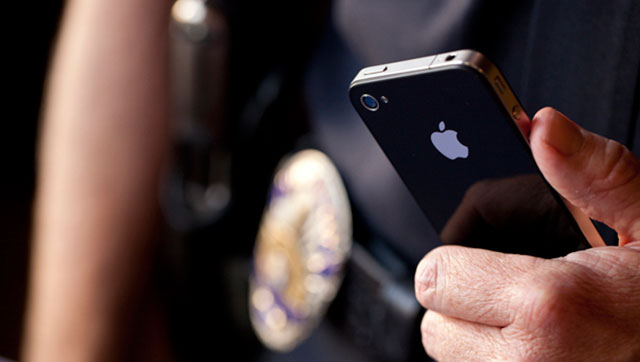
In the coming months, expect to see several cases in the U.S.
Supreme Court that revolve around privacy rights, technology and the
Fourth Amendment’s rights regarding search and seizure.
A recent article in USA Today points to two such cases
that the Supreme Court may take on about whether or not police have
the right to search mobile devices without first obtaining a
warrant.
It’s clear that police have the right to search a person during an
arrest, but do they have the right to search the contents of the
cellphone that is on that person and is that data usable in court?
Back in December, I spoke with
Kevin Metcalf, who is a former law enforcement officer
with more than 20 years of experience as a police officer, Border
Patrol agent, SWAT team member and Federal Air Marshal. He is
currently a deputy prosecuting attorney in Arkansas as well as a
professor at
American Military University, teaching courses in public
safety and legal studies.
Metcalf said the laws and standards for search and seizure of such
digital evidence are constantly evolving and it can be
extremely confusing for police and prosecutors alike. For example:
-
What information can police legally access from a suspect’s
device?
-
Can they pick it up and look through it?
-
Is the phone analogous to a box?
In regards to the third bullet point, a common legal argument is
that a phone or laptop is just like a box an officer finds in a
suspect’s vehicle. During a stop and arrest if an officer legally
has the right to search a box in the car that may have evidence
associated with the arrest, does that right carry over to a laptop
or a phone? After all, isn’t a laptop or phone just a digital
container?
The issue of whether or not police can search the contents of a
cellphone (and use it against a suspect in trial) is just the tip of
the iceberg when it comes to privacy rights and the law.
As a law enforcement officer, have you received training about how
to treat cellphones during an arrest? Do you consider the contents
of a cellphone potential evidence?
read more >
< < jump to the policetraining.net home
page>





