| Calendar | Add A Class | College Degrees | Online Classes | DVDs & CDs | On-site Classes | Advertising | Contact Us |


Sign up for FREE training articles & class updates Your Email:


cleardot.gif (807 bytes)


cleardot.gif (807 bytes)

January 2014

Important: To ensure future delivery of the Policetraining.net newsletter to your inbox (not bulk or junk folders) please add our "From" address info@policetraining.net to your address book or e-mail whitelist.

in this issue . . .


- Sponsored By -
 

line-small.gif (227 bytes)

The Deadliest Job in Policing


BY JIM DONAHUE

Reprinted from Officer,com

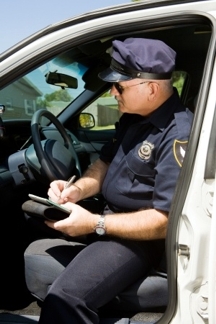
A cop who is writing a ticket outside his car is 400% more likely to die than a cop who is inside his car. That isn't a projection or a theory. Those are names on the Wall.

Recently, I had the experience of preparing for an in-service class for an agency in South Florida. The subject matter was teaching them the tactical and practical implications of moving from handwritten traffic tickets to using of handheld computers (a/k/a ticket writers). The students were all seasoned cops in the traffic unit.

I am not going to name the department because it could be any one of many agencies across the country. Putting the finger on their officers is also inconsequential. I've been witness to similar attitudes and behaviors in dozens of departments. These guys could have come from anywhere. So, as cops, they are not unique. They are like most of the rest of us.

To be fair, these cops are special to me. They are my friends. I know them now. I have a personal stake in seeing them survive and succeed. They were good students: they showed up on time, they were sober and they stayed awake for most of the class. What more could an instructor ask?

So, What's Up?

The material that I want to cover could easily start looking like a course in statistics that is written by a mathemagician. I will do my best to avoid that outcome.

Policing is a craft that is passed from one generation to the next. No matter how many hundreds of hours recruits sit on their collective butts in a classroom at a community college or academy, the REAL learning happens when a veteran officers shows the rookie how it gets done in real life. That's how I learned most everything that I value today.

There are widely-held perceptions in coppery about where the risks are - and where they aren't. Those perceptions are treated as reality. Training has been built around them. Equally important, we cops have internalized them so that they are ingrained in our behaviors.

The facts, numbers and statistics of today indicate that our perceptions don't match what has become reality. The mismatch is stealing the lives of good cops - needlessly.

What Are We Thinking?

Like most cops, I have thought about the possibility of being killed in the line of duty. What picture comes to mind?

I imagine being hit by a round in a hail of bullets exchanged with bad guys out on the street somewhere. I'd be protecting someone. I'd be fighting the good fight. I would give my life to save the life of a brother officer or an innocent citizen.

Who can forget the bank robbery in North Hollywood in 1997?

No one will ever forget Columbine High School.

More recently, there was the active shooter at the Westroads Mall in Omaha on December 5, 2007. One of my closest friends was the first sergeant to arrive on scene.

2009 gave witness to the horrible killings of four cops on a single incident in Oakland, CA.

Just weeks later, three officers made the ultimate sacrifice in Pittsburgh, PA.

These were widely seen and known by nearly everyone. Each was a classic situation where there was a Blaze of Glory.

 We are trained to face adversaries who have handguns, shotguns, high-powered rifles and edged weapons. The fortunate ones among us have agencies who regularly train shooting skills.

My last agency sent us to the range to qualify twice each year. Once we had qualified, we were done. The bosses considered that training. Hardly.

With regard to guns, there are electronic situational simulators, simunitions, scenario-based training with paint-ball guns or Airsoft equipment. We can practice a whole host of shoot/don't shoot exercises. Heck, for the past couple of years, a vendor has setup such a scenario room for us to use at the FOP tent site during Police Week in D.C.

Then, there is the gear.

Most (but not all) of us wear bullet-resistant body armor. Many hours of study, testing, and large amounts of money have led to new standards for body armor that have recently been put forth by the National Institute of Justice (NIJ).

We want the best handguns. We're being outgunned on the street, so high-powered rifles are becoming the norm. Some agencies, which lack the money to buy them, have enabled their cops to buy them on their own dime and then be trained and qualified to use them on the street.

What Is Reality?

My town is safe. Our residents support the police. They know that we are doing our jobs and trying to keep them safe. Bad things don't happen here.

That is an attitude that can lead a cop to his own funeral. It's called COMPLACENCY.

In preparing for the recent class, I worked with researchers at the National Law Enforcement Officers Memorial Fund in Washington, D.C. They are the source of the facts and figures used here.

Question: do the names of any of the towns listed below stand out in your memory?

    Marion, SD - population 825

    Niceville, FL - population 11,684

    Headland, AL - population 3,523

    Centreville, IL - population 5,635

    Georgetown, MD - population 5,100

Here’s what these tiny towns have in common: each one has experienced the loss of one of their officers in 2009. Each one of the cops was shot to death. There was no national news coverage. There was little attention from the media at any level.

Yet, these losses are very, very real. Each one is a father, mother, brother, sister, son or daughter to a family who is left behind in great pain. Each one represents an agency whose officers have been cut to the quick. Likely, each one died in a place where many thought, it can't happen here.

I ache when I think of the attention given the death of some famous rock and roll star turned criminal while the real heroes among us die and no once notices or seems to care.

Where Are You Most Likely To Die?

Of course, the glib answer is: anywhere.

The statistics show that in 2009, the most deadly place to be a cop is FLORIDA.

Considering the past three years, the state far in the lead is Texas. Coming in nearly tied for second place is California and Florida. Behind them are Louisiana, North Carolina and Pennsylvania.

Since the first recorded LE death in 1792, the stats pile up this way (top ten shown - contact me for the remainder of the list):

1.  Texas: 1,504

2.  California: 1,453

3.  New York: 1,305

4.  Illinois: 948

5.  Ohio: 743

6.  Florida: 719

7.  Pennsylvania: 704

8.  Missouri: 610

9.  Michigan: 534

10.  Georgia: 526

What Are You Most Likely To Be Doing?

This is where old perceptions get shaken up.

You are 190% more likely to die from an accidental event than you are from being shot. Where do most of these accidental events happen? Answer: in or around your police car. There is almost a 2:1 ratio between accidental deaths and deaths from being shot.

 The next statistic surprised even me.

I teach cops how to write tickets using computers. Often, it is a handheld computer. When I first started traveling the country in this work, I was astounded at how many cops were taught to stay outside of their car when actually preparing the ticket form. In a few instances, it was even the subject of their general orders.

That's what we cops generally think about when we consider the risks of our work. It's the mental image that conjures in our minds when we consider the possibility of our own End of Watch. It is, by definition, a heroic scenario.

Training Supports That Picture

We can examine training both at the academy level and ongoing in-service programs. Great amounts of time are spent teaching tactics, i.e. tactical entry, weapon retention, interview stance, physical control / fighting, and the value of using the 1.5 interview position. We stand to the side of a door when knocking. The list goes on.

I am a very strong proponent of training hard and using what I've learned on the street. When on patrol, I'm all business. Talk nice, think mean, are words learned early that have stuck with me. When in contact with a subject, always be thinking about how you can defeat him, was a shocking notion at first, but has proven valuable time and time again.

Originally, I came from Michigan. It gets cold there. Every cop I knew retired to the inside of their car when it came time to write the ticket. While motormen didn't have a car, they still returned to the vicinity of the motor when it came time to write.

As I encountered this outside the car practice, I asked: why? The answers generally centered on the cop's ability to better get to cover in the event the stop went sideways. I even had a chief tell me that he ordered his guys to be outside the car because they would be less comfortable and therefore finish the stop more quickly. That would allow them to write more tickets. His priorities were obvious.

My gut told me that being outside the car increased the risk of officer injury or death. So again, I turned to the researchers in Washington D.C. for hard numbers.

They examined data from the last 13 years. The identified cops who had been killed while actually writing a ticket/citation. Here are the cold facts:

A cop who is writing a ticket outside his car is 400% more likely to die than a cop who is inside his car.

That isn't a projection or a theory. Those are names on the Wall. They are graves with markers. They are families who struggle without their officers.

If you're a motor officer, I realize that you don't have the choice of being inside a car, but the risk remains just as great.

So, What's The Worst?

Stand outside your car, writing a ticket.

Do it in Texas, California or Florida.

You might want to make sure your life insurance is paid-up before you do.

Think about this: could you imagine your sergeant talking to your wife at the hospital? Think about how he might explain that you had knowingly put yourself at undue risk. Think about your kids. Think about your current work environment and how well you have adapted your safety practices to it.

What Do We Do?

To be blunt, some of this stuff just will not happen. I am going to say it because I want to get you thinking.

For every 1 hour spent on the range, you should spend 2 hours on the driving track.

For every 1 hour spent on defensive tactics, you should spend 2 hours on studying tactics when you are in/around your car.

In-service training should be developed to show you how to safely handle all of the new technology that is being thrust into the patrol car.

EVOC training should be altered. Cops should qualify as drivers on a regular basis - just as they must to shoot their guns. EVOC training must be updated to include the active intrusions in the cockpit by all of the technical gadgetry.

As it relates to the use of technology in the car, departments must take their heads out of the sand. Telling a cop: DO NOT USE IT won't work. It just can't work any longer. It is incumbent upon us to teach cops HOW TO USE IT in the safest manner possible.

Vehicles should be hardened to better withstand impacts and a roll over.

Sensor technology should be installed on vehicles that would tell an officer when someone or something is approaching while their car is stationary. Cars should be built with self-correcting lane tracking systems.

We must examine the fact that there is so much equipment inside today's patrol car that a cop cannot escape. It has become a death trap. The car interior must change in response to the increase in officer deaths.

Epilogue

I do not intend to diminish the value of training cops to handle assaults. That knowledge is vital to survival. Yet, as cops we must acknowledge the possibilities while we adjust to the probabilities.

It is time to take a fresh look at our city, our section and our community. Is your assessment based on current conditions? If not, it is time to reexamine your surroundings.

Has the demographic mix changed? Is your town now being infiltrated by bad guys from neighboring communities that encroach on your borders? Are you consistently applying WHEN/THEN thinking to driving and to traffic stops? That's when you are most at risk. Believe it! Statistics prove it.

Are you using every resource for cover and concealment when dealing with each situation?

I recently ran into an officer who had many years in the business. He had fallen victim (to some extent) to the it can't happen here thinking. His son works in the same agency - with less than a year on. Dad would not be happy if his son began using some of Dad's relaxed tactical approaches to situations. So, I ask: would you be comfortable to see your child use the same tactics that you do?

If the answer to that question is NO, then it's time for an update.

I'm not here to tell you how to be a cop. I believe that you know your situation best. What I do hope is that you'll take a fresh look. Make sure that your practices have kept pace with the times.

It's all about saving just one life and that life may be yours.

Be safe out there. As always, I welcome comments and thoughts.

 line-small.gif (227 bytes)

Fitness Tip from 

Shoulder injuries are 1 of the top 3 injuries for first responders, causing an average of 21 days lost work. Protect the shoulder by adding isolated external rotation exercises that will target the smaller muscles of the rotator cuff that are often neglected.

    line-small.gif (227 bytes)

Brake Lights Halfway to Eternity: Officer Suicide


By Dr. Dorothy McCoy

I have been following the research in officer suicide since 2006, when I was a Lead Instructor at the South Carolina Criminal Justice Academy.  I am convinced that we can significantly reduce the number of officers lost each year.

The death of an officer is a personal tragedy that ripples throughout the entire community. Suicide comes as a jolting shock to everyone touched by the tragedy. The individuals left behind are deeply wounded. The officer suicide rate is a national tragedy.  We can work together to find effective solutions.  We can offer our officers reasonable options to their concerns. We can offer our unwavering support.

If you would like to be a powerful advocate for officers at risk, learn more about the resources offered by your agency or organization and the options available.  We can reduce the occurrence of officer suicide by understanding the underlying factors and by influencing those factors. PTSD and other stress related disorders can be treated.

Alcohol use can be targeted.  Supportive services can be provided for troubled officers and their families. Communication throughout the agency can be optimized. Members of the law enforcement community can be educated to recognize and initiate aggressive action against suicide. Suicide and its underlying factors are our enemies and we must be willing to take a courageous and steadfast position.

We labor diligently to decrease crime and officer shootings, yet our ability to control these events is appallingly limited. Suicide, similar to patrol car accidents, is more amendable if we acknowledge the dire necessity for change and begin the arduous task of making those requisite changes.

Brake Lights Midway to Eternity

A former law enforcement officer turned publisher told a story that was so profound in its implication that it shook me. He said, “There are some very high bluffs overlooking Dana Point Harbor and the Pacific Ocean…I have been called to many suicides on those bluffs…the last one drove off. Witnesses saw his brake lights come on halfway down.” What were the driver’s desperate thoughts at that moment?  How many suicide victims would have “applied the brakes” if it had not been too late?

A study in 2002 indicated that suicide remorse may be higher than we might have imagined.  Nearly 90 percent of people who ask their doctors for assisted suicide later change their minds.  Remember, these patients are seriously ill and in severe pain.  If they choose life when given the opportunity, how many officers who committed suicide would have chosen differently if they had been given another chance?

My goal is to provide troubled officers a chance to choose life before they commit to death.  You can contribute to reaching this goal by educating yourself and your associates and becoming an active advocate for comprehensive stress management resources.

US LEO Suicide Rates

Do you realize that suicide among law enforcement officers and emergency workers is quite similar to the number killed in the line-of- duty? Why are the good guys and gals killing themselves, rather than pursuing suspects?

The National Police Suicide Foundation (NPSF) suggests that high stress levels and a lack of information about signs, symptoms and prevention techniques of suicide are the major contributors. It appears that education is an easy and inexpensive way to deter suicide. According to Violanti (2007), to confound estimating the approximate number of officer suicides, it is believed that an unknown number of police suicides are routinely misclassified as accidents.

It is important to understand the depth and breadth of the problem facing law enforcement. Michael Aamodt (2006), states,

“Law enforcement suicide rates were computed and compared to suicide rates in the general population. The best estimate of suicide in the law enforcement profession is 18.1 per 100,000. This figure is 52% greater than that of the general population but 26% lower than that of the appropriate comparison group (white males between the ages of 25 and 55). Thus, the notion that suicide rates are abnormally high in law enforcement was not supported by the data (Policeone.com). 

I discussed the same conclusion at a conference for the Society for Police and Criminal Psychology in 2006. Dr. Aamodt is also a member of the Society and a respected researcher.  However, let’s consider this dissimilarity between the groups; officers are normally thoroughly vetted by their departments before they are hired. Members of the general population are not.

Real Officers: Lost Lives

The New York Post reported a police suicide on September 2, 2003. According to the article, it appears that a 39 year-old Bronx officer, an 11 year veteran, used his 9 mm service weapon to kill himself after a disagreement with his girlfriend (also an officer). He was the father of three children; the youngest was 10 months old.

This is only one heartbreaking story of the many in the New York area. Multiply this incident by 126 (the estimated number of officers who committed suicide in the US in 2012) and you will have some indication of the enormity of this threat to law enforcement.

In October of 2003, a 61-year-old Houston Detective came to work as usual and went to his desk in the Homicide Division. According to the Houston Medical Examiner’s office, after sitting down he pulled out his service revolver and put a bullet in his head. Co-workers were absolutely stunned when this popular detective took his life. It was unusually quiet in the Homicide Division as fellow detectives struggled to accept and understand the tragedy.

Why had Detective X taken his life? A chaplain, who had known Detective X for more than 20 years said, “There’s going to be an overwhelming number of people very shocked and in disbelief about it” (The Houston Chronicle, 11-1-03). According to friends, he had suffered several losses in the last few years of his life. He was recently divorced, his children moved away from home and his dog died. It is not unusual for suicide to be the aftereffect of several distressing incidents or losses rather than one catastrophic event. Police suicide wears many faces, although commonalities exist. Depression, overwhelming stress, trauma, family issues, criminal or civil charges, department discipline and alcohol are frequently antecedents.

The Instrument

The most frequently used instrument of suicide is the officer’s service firearm. It is there. It is lethal. It is familiar. In San Bernardino County, California, a young police officer shot himself and his 26 year-old wife. They left behind two small children. The article doesn’t tell us “why” this tragedy happened. However, we can make some educated guesses. Unresolved critical stress almost certainly played a significant part. Perhaps, anger flared beyond normal limits. We will never know why these two young parents died.

We can work to stop the dying by enlightening officers and their supervisors about the causes and symptoms of police suicide. A spokesman for the San Bernardino County Sheriff’s Office was quoted in the LA Times saying, “I don’t know if we’ll know why it happened, and it’s a shock and surprise to all of us.” Does that mean there were no warning signs before this officer put his gun to his head and pulled the trigger? Not necessarily. It might mean that no one correctly interpreted the warning signs and took appropriate action.

If we all work together we can reduce the officer suicide rate. Though the rate has gone down slightly since 2008, it is still a stain on law enforcement and it questions our ability to take care of our own. That is not acceptable.

RESOURCES:

IACP http://www.theiacp.org/

Badge of Life http://www.badgeoflife.com/

The Department of Justice http://www.ojp.gov/newsroom/suicideweb.htm

COPLINE

Hotline number: 1–800–267–5463

http://copline.org/

This is a national hotline exclusively for law enforcement officers and their families. It is staffed by retired officers and a therapist with law enforcement experience to help active officers with the psychosocial stressors they face at work. The website also has some resources on officer suicide.

In Harm’s Way: Law Enforcement Suicide Prevention

http://policesuicide.spcollege.edu/

In Harm’s Way offers training seminars and workshops on suicide prevention, including an eight-hour train-the-trainers program that provides a comprehensive approach to stress management and suicide prevention for law enforcement professionals. The website contains numerous resources, including a toolkit to help provide suicide prevention training.

Law Enforcement Wallet Card

By Suicide Awareness Voices of Education (SAVE) (2008)

http://www.save.org/index.cfm?fuseaction=shop.productDetails&product_id=57D6AFB1-0933-0111-DC0761950356DACA

This wallet-sized card contains some of the warning signs for suicide and some basic steps that officers can take if they think a fellow officer is considering suicide.

National Police Suicide Foundation

http://www.psf.org/

This organization provides several different kinds of training programs on suicide awareness and prevention as well as support services that meet the psychological, emotional, and spiritual needs of law enforcement officers and their families.

Police Suicide Law Enforcement Mental Health Alliance

http://www.lemha.org/

This network of groups and individuals promotes education and advocacy for new research and mental health strategies for police officers. The website provides access to a large number of written materials on police suicide and mental health.

Dr. McCoy is a psychotherapist, master instructor, published author and consultant (personality and training). She is a former South Carolina. State Constable and worked at the South Carolina Criminal Justice Academy, where she researched, created and implemented the Master Instructor Program. She also taught in the South Carolina Leadership Institute. Her most recent law enforcement manual on retraining emotions, is in the hands of a publisher.  Dr. McCoy also volunteered in the Cold Case Squad at the Richland County Sheriff’s Department.  Reach Dr. McCoy via www.themanipulativeman.net
 

line-small.gif (227 bytes)

Establishing Rapport with a Suspect

By John Reid & Associates  

We all know someone whom we respect and admire. It may be a teacher, coach, pastor, scout master, friend or parent. Assume that we committed a crime of some sort and this admired individual sat down and said: 

"We both know you made a mistake and we also both know that the right thing to do is to tell the truth. For everyone concerned let people know why this thing happened. Did you plan this out, or did it just happen on the spur of the moment? I don't' think that you would ever plan something like this out, it was just the spur of the moment, wasn't it?" 

Because of the established trust and respect felt toward this individual, we would very likely listen to his statements, nod our head in agreement, and confess that what we did happened on the spur of the moment.

On the other hand, if the person who said these words was a stranger whom we believed was just out to punish us and did not care about our well being, reputation or self-image, we would likely challenge the individual to prove our guilt and continue to deny involvement in the offense. The difference between these two situations is that in the first the communicator has an established rapport with the suspect.

 In most professional interactions (physician, attorney, therapists, investigator) rapport is defined as "a relationship marked by trust and conformity." In other words, if my doctor recommends that I get a particular medical test I will schedule the test because I trust the advice of my physician and perceive her/him as looking out for my best interests and acting as an advocate for me. 

For obvious legal reasons, an investigator should not make statements designed to convince a suspect that he or she is acting as an advocate for the suspect. However, to be effective the investigator must try to legally convince the suspect that he is someone who can be trusted and is a fair and objective person.

First Impression is Critical

Research has shown that within seconds after meeting a stranger a strong and lasting impression of the stranger is formed. The investigator needs to be very aware of this first impression effect. Upon entering the interview room the investigator should appear businesslike but not authoritative or threatening. For this reason, it is recommended that the investigator avoid introductions containing an authoritative title such as "Detective" or "Captain." For the same reason the investigator should not use emotionally charged language when referring to the purpose of the interview, e,g, "murder", "rape", "molest."

In a non-custodial case the initial introduction may be something like this: "Good morning, my name is Brian Jayne. Thank you for coming in to talk to me."

If the suspect is in custody, the introduction may be:

 "Good morning Mr. Johnson. Last night someone took money from Jake's Liquor Store at gunpoint. I would like to ask you questions about that but before I can ask any questions I have to let you know that you do have the right to remain silent, any statement you make can be used against you in a court of law, that you have a right to an attorney and if you cannot afford an attorney one will be provided. Do you mind talking to me about this?"

Establish a Relationship with Suspect

 After the initial introduction comes the relationship-building phase of rapport. The investigator's goals are to establish his objectivity by asking non-accusatory questions and, second, that the interview consists of a question / answer format. In addition, at this early stage of the interview, the investigator wants to establish the suspect's baseline behaviors (eye contact, communication style, emotional state, etc.) and make preliminary assessments of the suspect's intelligence, ability to understand the English language, mental health, etc.

The investigator may choose to initially engage in casual conversation with the suspect at the outset of an interview:

"Did you have any problems finding our office?"

"Did you come in on the Eisenhower?" "How bad was the traffic?

"Do you think that we are ever going to see Spring this year?" 

An especially effective technique to establish rapport with a suspect is to express sincere interest in some aspect of his life. For example, the investigator may notice a Marine tattoo on the suspect's forearm and ask when and where he served. Perhaps the investigator can comment that he attended the same high school as the suspect or lived in the same part of town. This personal attention or common experience provides valuable material to establish trust. 

At some point the investigator will spend a minute or two asking the suspect non-threatening background questions under the pretense of gathering or confirming biographical information:

"Could you spell your last name for me?"

"What is your first name?"

"What is your marital status?"

"Do you have any children?"

"What is your current address?"

"How long have you lived there?"

"Does anyone else live there with you?"

"Are you presently employed?"

"Where do you work?"

"What school do you attend?"

"Have you declared a major?"

"Do you participate in any extra curricular activities?" 

Establishing rapport with most suspects only takes a few minutes. If the suspect is extremely nervous or has been mistreated by a previous investigator and is therefore resentful, several minutes of non-threatening background questions may be required. What should be avoided, however, is a very lengthy (30-45 minute) rapport building session. Under this circumstance, referred to as "forced rapport," suspects may feel that the investigator is trying to manipulate them by delving into personal areas such as their childhood, personal values or hobbies that have nothing whatsoever to do with the issue under investigation. 

An exception to this guideline is when establishing rapport with someone who is incarcerated. The incarcerated individual's daily routine is boring and a lengthy, non-threatening conversation with the investigator may be welcomed. Under this circumstance it is not unusual for the investigator to conduct dozens of interviews with the inmate over a period of several months.

Another consideration for an extended rapport-building period is the suspect's culture. Some cultures consider it rude to only have a peripheral social exchange before getting down to business. Under this circumstance it may be appropriate to spend an extended time with the suspect sharing personal information about each other's families or country before addressing the issue under investigation. 

Establishing Structure to the Interview

 The investigative interview is not an informal chat with a suspect. It is structured and purposeful. This means the investigator will ask prepared questions and document the suspect's responses with a written note following each response.

There are many benefits to taking active written notes during an interview. One of them is that active note taking slows down the pace of questioning. This creates a period of silence following each verbal response. It is during this period of 3-5 seconds that most significant nonverbal behaviors occur. This period of silence also allows the investigator time to analyze the suspect's response and make a decision to ask either a follow-up question or move to the next area of inquiry.

Conversely, if the investigator takes sporadic notes or only starts taking written notes when the suspect answers questions about the crime, the suspect will attach special significance to the fact that the investigator decided to take a written note. This may cause the suspect to be more guarded and less forthright in volunteering information, which is obviously undesirable.

In conclusion, establishing rapport with a suspect at the outset of an interview will be an important factor in determining the success of the interview. Rapport begins with a non-threatening and business-like introduction. The investigator then needs to establish the suspect's trust. This can be accomplished by asking non-threatening questions that appear to establish the suspect's identity or other important background information. It is also important that the investigator establish a pattern of taking written notes right at the outset of the interview.

Image credit: lisafx / 123RF Stock Photo

Image credit: shakzu / 123RF Stock Photo

Credit and Permission Statement: This Investigator Tip was developed by John E. Reid and Associates Inc. Permission is hereby granted to those who wish to share or copy the article. For additional 'tips' visit www.reid.com; select 'Educational Information' and 'Investigator Tip'. Inquiries regarding Investigator Tips should be directed to Janet Finnerty johnreid@htc.net. For more information regarding Reid seminars and training products, contact John E. Reid and Associates, Inc. at 800-255-5747 or www.reid.com.


 < < jump to the policetraining.net home page>