
By John Reid & Associates
A
recent Frontline episode dealt with interrogation techniques and
false confessions.1 The presented case involved the 1997
rape and murder of Michelle Bosko from Norfolk, VA. The following is
a synopsis of facts as reported by Frontline:
The victim's husband, who was a sailor in the navy, discovered her
body and sought help from the next door neighbor, a fellow sailor
named Daniel Williams, who then contacted the police. While the
husband had an air-tight alibi, suspicion focused on Williams.
Therefore, they asked him to come to the station for a voluntary
interview which eventually turned into an 11 hour interrogation.
During the interrogation, Williams was administered a polygraph
examination which he was falsely told indicated deception. After
being threatened with the death penalty, Williams confessed to the
rape and murder to avoid execution. In his initial confession he
stated that he struck the victim with a shoe and beat her to death.
Following the autopsy it was determined that the victim died from
stab wounds and strangulation. Williams was re-interrogated and,
after the detective revealed the victim's actual cause of death,
gave a second confession consistent with the autopsy findings.
Four months later, the crime lab determined that Williams' DNA did
not match crime scene evidence. Rather than doubt the integrity of
Williams' confession, the police were convinced that there must have
been another perpetrator. Williams was again interrogated and
threatened with the death penalty if he did not name his accomplice.
He named Joseph Dick Jr., a fellow sailor who was given a polygraph
examination which he purportedly failed, and threatened with the
death penalty if he continued to lie. Believing that he would be
exonerated based on DNA evidence, Dick confessed to helping Williams
rape and murder Michelle Bosko. When the DNA analysis came back
negative, Dick thought charges against him would be dropped.
Instead, the investigator was convinced that there must have been a
third person involved in the crime.
By this time Dick was represented by council who was convinced,
based on Dick's confession, that his client must be guilty. The
defense attorney recommended that Dick cooperate with the police to
avoid the death penalty. Dick provided the name of another
accomplice, Derek Tice, who was subjected to lengthy interrogations
(after his request for an attorney was ignored) and threatened with
the death penalty. Like the others, Tice confessed. However, the
crime scene DNA did not match Tice so he was re-interrogated to find
out who else was involved in the crime. Tice selected the photo of a
sailor named Eric Wilson who also was persuaded to confess, but
whose DNA also did not match the crime scene. This cycle was
repeated until eventually seven sailors were named as being involved
in the murder of Michelle Bosko. Despite the fact that none of the
seven defendants' DNA matched crime scene evidence, all were charged
with the rape and murder. During the course of the trials, Dick
backed out of a plea bargain, and refused to offer testimony against
the latter three defendants. Because his confession and testimony
was the only evidence implicating these defendants, charges against
them were dropped.
Before the first of the four remaining trials began, a woman
approached the police with a letter she received from an inmate
named Omar Ballard. Ballard was serving time for beating a woman in
the same apartment complex where Michelle Bosko lived, and raping a
14-year-old girl two miles from Bosko's apartment complex. In the
letter, Ballard confessed to killing Michelle Bosko. Ballard was
questioned by police and, in a short period of time, confessed that
he alone raped and murdered Ms. Bosko. Ballard's DNA matched the
crime scene DNA.
The prosecution had to either acknowledge that the police obtained
four false confessions or somehow attempt to reconcile all of the
evidence, which is the path they chose. The theory presented at
trial was that the seven sailors wanted to rape and murder Ms. Bosko
but couldn't get into her apartment so they approached a stranger,
Omar Ballard who agreed to get them into her apartment and commit
the crime with them. As part of a plea agreement Joe Dick testified
against Eric Wilson and Derek Tice, both of whom were found guilty
and sentenced to 81/2 years and life in prison respectfully. After
realizing the futility of persuading a jury that their confessions
were false, Williams and Dick both plead guilty and received life
sentences.
In 2007, after reviewing legal appeals, the Virginia Governor
granted conditional pardons to Williams, Dick and Tice (Wilson had
already been paroled). A team of attorneys is still working to clear
the names of what the media has called the "Norfolk Four." If the
information presented by Frontline is accurate, certainly there is a
high probability that these four confessions are false.
Why Did the Norfolk Four Confess?
These suspects were adults suffering from no diminished mental
capacity and were not deprived of basic biological needs. The length
of the interrogations (8-11 hours) were substantial, but not so long
as to automatically cause a false confession. This is especially
true considering that, reportedly, more than an hour was spent in
prepping the suspects to give an audio-taped confession that was
consistent with the current police theory. Lying to a suspect about
failing a polygraph examination certainly would not cause an
innocent suspect to confess. While the interrogator was described as
intense, tenacious and unrelenting this, in and of itself, would not
be apt to cause an innocent person to confess. The other tactic
common to each interrogation was that these four suspects were
threatened with an inevitable consequence -- each of these suspects
reported that he confessed to avoid the death penalty.
The standard rule of thumb relating to improper interrogation
techniques is that the investigator should not offer the suspect any
threats or promises. In this context, threats are often thought of
as threats of physical harm, isolation or deprivation of biological
needs. There is, however, a much more powerful threat that can be
made during an interrogation -- threatening the suspect with
inevitable consequences. These four suspects were offered the most
potent threat possible - the threat of death i.e., "If you continue
to lie about this you will die. Do you want to die? That's what will
happen if you continue to tell me you didn't do this". This was then
coupled with the promise of life, i.e.., "I can help you out on this
thing. If you tell me the truth I will work it out so you will not
face the death penalty. You will be able to live." Who in their
right mind wouldn't accept life over death?
When an innocent suspect is convinced that he is helpless to avoid
consequences of a crime (a long prison sentence, having children
placed in foster homes, being deported to a foreign country, having
a license or certificate revoked, etc.) this suspect will do
anything in an effort to reduce those perceived consequences. As
illustrated by this case, when threatened with inevitable
consequences, innocent suspects will not only confess, but adjust
their confession to please the interrogator (Dick offered seven
different statements) and testify against defendants the suspect
knows are innocent.
Concepts within the Reid Technique have been criticized under the
guise of threatening inevitable consequences. Specifically,
interrogating a suspect on the presumption of guilt, discouraging
denials from surfacing and the use of an alternative question, e.g.,
"Did you plan this out for months in advance, or did it just happen
on the spur of the moment?" These criticisms are baseless.
Expressing high confidence in a person's guilt certainly would not
motivate an
innocent person to believe that it would be in his best interest to
falsely confess. Rather, the innocent person would be motivated to
more strongly maintain his innocence or terminate the interrogation.
Similarly, discouraging a suspect from voicing denials will cause
the typical innocent suspect to become more forceful in their
denials or terminate the interrogation, not to believe that because
the interrogator is not accepting their denial that it would somehow
be in their best interest to confess.
Finally, it has been argued that the alternative question forces the
innocent suspect to incriminate himself. Nothing could be further
from the truth. A suspect always has a third choice which is to
reject the alternative question and maintain his innocence. None of
the tactics or techniques within the Reid Technique would cause an
innocent person to believe that they would benefit by offering a
false confession. However, this is not the case when a suspect is
threatened with inevitable consequences, which is why we are
adamantly opposed to this interrogation tactic.
The case involving the Norfolk Four was rife with failures within
the criminal justice system. The police department was negligent in
allowing the detective, who had a reputation for unethical
practices, to conduct these interrogations. The detective was
eventually convicted of multiple counts of extortion and lying to
federal law enforcement agents. The prosecutor stubbornly refused to
acknowledge that four uncorroborated confessions were probably
false. A defense attorney failed to challenge a confession his
client claimed was false because of coercion. The prosecution's
primary case was built on confessions and testimony from individuals
who were motivated to avoid the death penalty. Interestingly, when
the prosecutor offered Ballard a d
eal to
avoid the death penalty if he testified that the other four
defendants committed the crime with him, he refused. The lesson from
the Norfolk Four is clear: threatening a suspect with inevitable
consequences has no place in a properly conducted interrogation.
1 The Confessions, PBS 2010 Credit and Permission Statement: This
Investigator Tip was developed by John E. Reid and Associates Inc.
Permission is hereby granted to those who wish to share or copy the
article. For additional 'tips' visit
www.reid.com;
select 'Educational Information' and 'Investigator Tip'. Inquiries
regarding Investigator Tips should be directed to Janet Finnerty
johnreid@htc.net.
For more information regarding Reid seminars and training products,
contact John E. Reid and Associates, Inc. at 800-255-5747 or
www.reid.com.

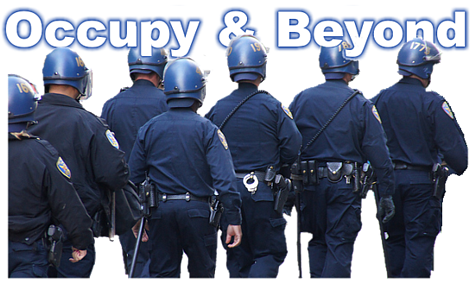
Practical Steps For Reasonable Police
Crowd Control
The “Occupy Movement” is really a precursor to
the near future for many of our police agencies. There are many
other forms of protest we should expect to encounter: political
demonstrations, union protests, sports celebratory events,
immigration rallies and other protests of governmental actions.
We shouldn’t forget the lessons learned in the
1960s during the civil rights movement and Vietnam protests. We
shouldn’t simply rely on our new equipment and force tools.
There are five continuing issues that rise up
from our recent encounters with crowd control: officer/agency
attitude, unlawful assembly response, arrest provisions, use of
force, and mass arrest protocols. These are the issues that have
become the focus for civil actions against police agencies.
Officer and agency attitude is displayed whenever we
engage in crowd management and control. It’s imperative that we
leave our personal beliefs at home when we’re assigned to crowd
control. Many times our beliefs will be directly opposite those that
we’re going to be facing. We should be the good guys. We must be
impartial in our response to these various crowds. There is no place
for officers to put tape over their nametags. We must keep our
mouths in check even when talking amongst ourselves. Our job becomes
much more difficult when the crowd believes we’ve taken sides.
Every state has a provision for
declaring an unlawful assembly. There are four
essential elements that should be met in declaring a demonstration
as an unlawful assembly. The first is to issue the declaration in a
manner that you can record and document so that everyone affected
could have heard the announcement. That means you need to have
officers stationed at the furthest parts of the demonstration. Next
you need to give the demonstrators a specific amount of time to pack
up their belongings and leave. You need to give them the routes you
want them to use when leaving. Those left behind are now committing
a misdemeanor. Now those left behind can be arrested; not forcibly
driven off with chemical agents and batons.
Arrest provisions, even during mass demonstrations,
are still guided by
Graham v. Conner. Demonstrators not leaving are engaging
in civil disobedience and most want to be arrested. Now if the
demonstration turns into a riot endangering the public or mass
destructive vandalism occurs; our tactics will change to protect the
general public and personal property.
So we’re now going to arrest those demonstrators
who have elected to remain. They are now committing a misdemeanor;
probably not the most serious of crimes. What’s reasonable? Of
course it depends on the level of resistance presented. Expect
verbal antagonism; it’s not another crime under these circumstances.
Expect that some will try to make our arrest procedures more
difficult by locking arms or using locking devices. Some will
actively resist by twisting and turning. Others may assault you.
Each of these levels of resistance should be anticipated. We can
reasonably respond to overcome these types of resistance and affect
the arrest.
You’re going to be on
television and the Internet.
How do you want to be depicted? We’ve got all the time even if it’s
overtime. Now is the time to slow down the arrest process and
proceed methodically. Move in to each arrestee or a small group of
arrestees and verbally seek compliance. If they resist we have
placed them on notice and now can use force to get them to comply.
This is the time to have each arrest team’s conduct videotaped by
our photographer. You don’t want to rely on the hundreds of smart
phones and hand held devices in the crowd of onlookers.
Another issue to consider is how to document any
normally reportable
use of force. No current written force policy says
that there is an exception to the force reporting policy when
engaged in crowd control. When you assemble for crowd control you
need to conduct an inventory of your chemical agents and impact
rounds. If you don’t, Internal Affairs is going to be very busy
reviewing hours of video and Internet footage.
Mass arrests can be difficult; but they’re
impossible without a protocol. The essential aspects are to match up
the officer observing the violation and making the arrest. Without
this match the prosecution is unrealistic and it ends up looking
like we simply were jacking up the demonstrators. An unplanned mass
arrest procedure will also end up looking like we were simply trying
to punish the arrestees for their demonstration by forcing them to
wait unreasonable hours for processing. There are other examples of
degrading misconduct in mass arrest situations. Forcing arrestees to
wait in locations without restroom facilities and requiring them to
relieve themselves on the floor or in prisoner transport vehicles.
Writing booking numbers in black markers on the arrestees’ forearms.
These forms of abuse cannot be condoned.
The digital age today makes mass arrests easier.
Officers can mark their flex cuffs with their serial number. The
videotaping of the arrest can serve to identify the arresting
officer. You might consider using an IPad or even a blank slip of
paper to record the officer with the arrestee. It might seem easier
and more cost effective to simply have one officer be the arresting
officer for all arrests, but it will backfire and cost your agency
much more than overtime in the subsequent civil lawsuit.
It’s time to dust off those contingency plans
from years ago. Maybe they’ve been throw out, outdated or don’t
exist. You need to start planning now so you don’t get caught short
when you encounter your next demonstration.
SEE ALSO:
Law Enforcement Administrative Investigations, 3ed
($49.95 + shipping)
A Supervisory and Agency Guide To handling citizen complaints of
misconduct, conducting administrative investigations, managing the
Internal Affairs Function, creating reasonable and defensible
discipline.
TRC491: Use of Force, Legal Update & Best Practices
($50 + shipping)
53 Minute Recorded Video of Webinar Presentation (Microsoft Windows®
Media .wmv format)
Instructor's PowerPoint® Presentation in electronic format
“Use
of Force 2nd Edition" by Jack Ryan, Printed Manual
The Law and Best Practices of Successful Police Operations, 2ed
($59.95 + shipping)
The most comprehensive law enforcement LIABILITY and BEST PRACTICES
manual in the country!
Includes over 360 pages of best practices and critical task
liability issues for law enforcement.
2010-2011 Legal Guide for Law Enforcement
($15 + shipping)
A comprehensive legal guide for critical task in law enforcement,
outlined in this easy to read and understandable flip guide. 4 x 6,
spiral bound and indexed for quick reference, 149+ pages.

Some veteran cops are really great mentors. Some are not. But
everyone wants to bestow wisdom on young officers.
by Dean Scoville -
Police Magazine
A couple of weeks ago, I blogged about,
"The Best Advice I Ever Received From Other Cops."
It seems only appropriate that I should also share some of the
less sagacious comments I and other deputies and officers have
received through the years, as well.
1. "F 'em if they can't take a joke"
Oh, if that were only the case. It might be romantic to dismiss
those who take umbrage with your unique witticisms, but make no
mistake about it: You will probably be the one getting screwed
if they can't take a joke.
I've seen officers of every rank get their tit in a wringer over
something they said or wrote about a person of another sex,
lifestyle, race, or creed. Pranks, too, have a curious way of
coming back to bite the prankster in various parts of his
anatomy. Personally, I love irreverent humor, but the strident,
humorless minority will always have the last laugh. Try not to
play straight man to them.
2. "You should work down at ______."
When I was working I began to wonder if every deputy I met
wasn't a frustrated career guidance counselor. I've been guilty
of giving this kind of advice, too: "You got a real purty
mouth," spoken all "Deliverance"-like. "You should work vice."
People sometimes mean well in making recommendations about where
you might want to work and how it'll be a lot better than
wherever you're currently situated. But take it all with a grain
of salt.
That greener pastures syndrome found me working at Sheriff's
Information Bureau (our Public Information Office), a place I
was categorically ill-suited for. Apparently, it's considered
poor form for a PIO to tell people to blow it out their ass. Had
I done more recon before committing myself to the assignment, I
would have saved myself and others a lot of turmoil.
In retrospect, I'd have been better off listening to Dionne
Warwick and her Psychic Hotline friends for my career advice.
3. "Come on. No one's gonna know."
Translation: Everyone's gonna know.
4. "Don't worry about it, I got it."
Spoken from the same conscientious guys who were prone to
spilling their sodas in their patrol cars, thereby converting
the interiors into the human equivalent of fly paper. They'd
assure me that they'd do everything from book my evidence, to
watch my detainees. The next thing I knew, I was writing memos
on missing crap and going on needless foot pursuits.
As a sergeant, I found rookie cops were notorious for wanting to
show that they were squared-away and could take care of
situations that they hadn't previously been exposed to. Often,
this proved a synthesis more hoped for than achieved, and I
learned real quick that sometimes it was just easier to stick
around and make sure that things were done right, as opposed to
coming back later and cleaning up the mess.
5. "Five years from now, no one will care."
Absolute BS.
I still find myself brooding over crap from years ago. And God
knows how many people I've pissed off along the way, too. But I
do know of a couple whose opinion of me was formed by a singular
incident, and it wasn't until years later that any damage
control was done.
6. "He's a good guy. You just have to get to know him."
Translation: He's a stone cold asshole.
7. "Specialize."
OK, maybe not bad advice in and of itself. But when adopted
early in an officer's career before he's or she's covered the
prerequisites, it can leave that officer vulnerable on other
fronts. Yes, you'll find the cops who are vacuum cleaners when
it comes to taking drugs off the streets and guys who can
recover GTAs like a good thing.
But all too often you'll find that they have difficulty handling
things that they're less familiar with. Often, this deficiency
is the result of a willed denial as they've done everything they
could to avoid handling such calls—e.g., domestics, child abuse
cases, thefts by trick or device—until it inevitably comes back
and bites them in the ass.
Better advice: "Be well rounded first, then specialize if you
want."
8. "Trust them-they know what they're doing."
Yeah, right. Like the time the suicidal dude turned on the gas
lights. What's the first thing SWAT wanted to do?
Toss in some flash-bangs.
9. "I'll beat your ass to the scene."
And your sister car probably will—if he gets there at all. Don't
get caught up in playing "Grand Theft Auto: Moron Patrol." Worry
about keeping your own patrol car sunny side up, tire treads
down.
10. "Never be smarter than your peers or your bosses."
On the one hand, it apparently seems a good rule to live by: I
know a lot of people who do, with little effort.
On the other, if you really aren't smarter than those above you,
you'll always be vulnerable to them. It seems to me that you'd
want to be smarter than them—and, when provoked, let them know
it, too. They'll screw with you less.
Famous Last Words
"He don't look so tough."
'Nuff said.

By Dr. Dorothy McCoy
http://www.PersonalityOne.com
I met Chief Michael Carroll of the West Goshen Police Department
(Pennsylvania) at The South Carolina Criminal Justice
Academy Testing and Measurement Conference in November of 2006.
Chief Carroll impressed me as a man of honor and a police executive
who could make the hard decisions that are inherent in law
enforcement. I decided to call Chief Carroll and talk with him
about police ethics. Chief Carroll said ethical behavior is taught
when we are children and because of that early training we either
think ethically or we do not. However, he believes that we can teach
officers to be Ethically Responsible, that is, to behave in an
ethical way. We can say to officers, “here are the rules that govern
ethical behavior, we expect you to follow them.” If we discuss
behaviors we simplify ethics to an observable phenomenon.. Either
you accepted free dinners from the owner of the local diner or you
did not. Easy.
Chief Carroll said that unethical officers are a curse on our
profession and should be expurgated. He states, quite reasonably,
that police executives should not be surprised when an unethical
officer behaves in an unethical manner. In his department he would
prefer to know as soon as possible if an officer is ethically
challenged. In theory, officers can be saved if we identify their
deviant behavior early in their careers before the hypothetical
“point of no return.”
When developing a procedure to handle unethical behavior it is
important to avoid both “type I” and “type II” errors. A type I
error is a false negative, in effect; we have decided that something
is false and it is not. A type II error is just the opposite, it is
a false positive. We have concluded that something is true and it is
not. Many Americans believe that the verdict in the O.J. Simpson
trial was a Type I error. In the last few years several inmates
have been released from prison because DNA evidence has indicated
that they did not commit the crime for which they were imprisoned.
These individuals are victims of type II errors.
There should be safeguards in an agency’s ethical behavior
procedures to protect the citizen, the agency and the officer. Few
situations are sadder than a good officer forced to leave his/her
agency after years of dedicated investment in his/her career. This
can happen if the officer is falsely accused and dismissed.
Conversely, we cannot allow unethical officers to besmirch their
agency and our profession. Chief Carroll and I discussed this also.
What if an executive does not publicly support his or her officer
(who has been falsely accused), because it is not politically
expedient to do so? This would be an ethical violation by the
police executive. Officer morale in such an agency would be abysmal.
The Pursuit of Ethical Behavior
The pursuit of ethical behavior is fraught with hurdles, barriers
and perplexing complexity. During his presidency, President Jimmy
Carter made the rather ill considered decision to give an interview
to Playboy Magazine. In the interview he said, “I have lusted in my
heart.” Though “lusting in his heart” may have been an all consuming
theoretical dilemma for President Carter, it would not have
constituted an ethical breach. If a thought has not been transformed
into a behavior, it is not an ethical violation. Philosophers may
argue this issue, nonetheless we cannot read thoughts, hence we are
limited to observable behaviors.
Though we would prefer solid blacks and shimmering whites to clearly
mark our ethical path, such definite, and easy to understand
indicators seldom exist. We are left to choose the ethical course by
way of consultation, investigation, education and reflection.
Unfortunately, it may not be an straightforward process. If there is
more than one individual in the process they may not be in
agreement. In fact, the individuals who take the high ethical road
may be in the minority. Also, they may be extraordinarily unpopular.
We can find definitions of ethical thoughts, beliefs and behaviors.
We can also turn to guidelines that help us to reach ethical
decisions. Once we understand and practice the fundamentals of
ethical behavior, maintaining high standards requires constant
vigilance and like-minded support.
Defining Ethical Conflict
Ethical conflicts arise when the actions of one person or a group of
individuals interfere with the interests of another person, group of
people, or the community as a whole. Unfortunately, ethical
decision-making models, no matter how elaborate, cannot adequately
portray the complexity of ethical dilemmas (FBI Bulletin, May 2002,
Schafer).
Police Integrity
In the Carl B. Klockars’ (et al) book, The Contours of Police
Integrity, he states that integrity is more that the recognition of
“bad apples.” This approach recognizes the importance of three
distinct efforts:
-
Organization rule making
-
Detecting, investigating and disciplining rule violations
-
Circumscribing the code
Organizational Rule Making
“In a police agency of integrity, police officers ought to know the
agency’s rules that pertain to integrity, understand the agency’s
rational for them, and come to
believe in the rightness of both” (p. 7) Written rules are of little
value if no one practices them.
Detecting, Investigating and Disciplining Rule Violations
“In a police agency of integrity, the occupational culture of the
agency will support the discipline of officers who violate agency
standards of integrity” (p. 7). Historically this rule has been
limited by the character “loyalty” and the emotion “fear. “
“If all my friends were to jump off a bridge, I wouldn’t follow. I
would be at the bottom to catch them when they fall." What a
profound statement; unfortunately, I don’t know who said it. It may
appear, if a fellow officer commits a breach of ethics, that we have
only two choices and those choices are mutually exclusive: 1) Commit
to helping him disentangle himself or 2) Support Administration or
Internal Affairs and abandon the officer. I think the quote gives us
at least one other choice. We can choose to be entirely ethical, yet
(if possible) help our fellow officer through the ethical maze
including the disciplinary process. We don’t have to agree with an
officers’ behavior to be supportive.
Defining the Code
Administrators should define both what behaviors are covered by code
and to whom the benefit of its coverage is extended
Dr. Dorothy McCoy
Personality One
http://www.PersonalityOne.com
Articles, Services and Quizzes
Publications
The Ultimate Book of Personality Tests
The Manipulative Man
From Shyness to Social Butterfly
919-304-1073
< <
jump to the policetraining.net home page




